Why China
A regenerative material that is developed, licensed and made here, a licensed range that spans imported and domestic products, and verification you perform yourself before anything is opened.
WHY CHINA
Why China — and what you would actually be coming for.
Four concrete things here are worth a flight: a regenerative material that is developed, licensed and manufactured in this country; a licensed range that spans imported and domestic products; a way to verify the vial, the device and the doctor for yourself; and a trip short enough to fit into a normal week.
The detail follows below, including the question most clinics answer last — what it costs, and when you pay.
THE SHORT VERSION
What China actually gives you
Four things, in plain terms. Each one is expanded further down this page.
A material that is made and licensed here
Recombinant human collagen — produced by engineered cells carrying the human gene rather than extracted from animal tissue — is manufactured in China and licensed here for medical use. The first implantable device of its class was cleared in 2021; an injectable solution and a gel followed.
What it means for youIf this is the material you are looking for, you can have it here as a licensed product, with an approval record you can read before you book.
Imported and domestic, in the same place
China licenses imported and domestically developed products side by side. Six botulinum toxins are licensed here — the first Chinese one in 1997 — and the collagen-stimulating injectables and the energy-based treatments cover the same non-surgical ground.
What it means for youYou are not choosing between the product you already trust and the newer option you have been reading about — they are in the same clinic and the same plan.
Checks you make, not claims we make
Licensed devices and injectables here carry registration and traceable codes, and physician licences sit on the National Health Commission's public registry. Who may perform these procedures at all is set by regulation, not clinic policy: a registered licence, three years in dermatology, formal aesthetic-medicine training.
What it means for youA counterfeit vial, a substituted device or an unlicensed practitioner is something you can rule out yourself, before anything is opened.
The trip fits a normal week
Non-surgical work means no general anaesthetic and nothing that keeps you indoors waiting for swelling to settle; a common first visit is three days. Nanjing is about an hour and a quarter from Shanghai by high-speed rail, with direct flights from six Southeast Asian cities.
What it means for youYou can have this done without taking a leave of absence — and bring someone who is coming for the city rather than the clinic.
One thing this section is not: an argument that treatment in China is better than treatment anywhere else. That is not a claim we can make, and safety is not a property of a country. It is a list of what exists here, and of the parts you can check for yourself.
ONE — THE MATERIAL
A material that is licensed and made here
This is the part of the page that matters most if you are looking for a regenerative material rather than a conventional filler. Collagen for medical and aesthetic use has historically been extracted from tissue rather than made — most often porcine or bovine, sometimes donated human. Recombinant human collagen is made differently: engineered cells carrying the human gene produce it, so what you are given is human protein of a defined sequence rather than a tissue extract whose composition varies with the source.
China has a developed industrial base for this material, and the products are licensed here for medical use. The first implantable device of the recombinant human collagen class to be cleared by China's medical device regulator was approved in 2021, and the range has widened since — a solution for injection followed, then a gel. The practical difference for a patient is availability: here it is a licensed product, made in the country, with an approval record you can look up.
The same breadth holds across the rest of the injectable category. China's first domestically developed botulinum toxin was approved in 1997, and six are licensed here today — two developed in China and four imported from established international manufacturers. Collagen-stimulating injectables show a similar pattern: a domestically developed poly-L-lactic acid filler was approved in 2021, and both domestic and imported products have been licensed since.
If recombinant human collagen is what you are looking for, this is a country where it is licensed, manufactured and on the shelf — and you do not have to take that on our word, because the approval records are public.
We have not named manufacturers or products on this page: product names go up once our clinic's supply documentation and brand authorisation are confirmed. At consultation, ask — and you will get the product we use and the manufacturer who makes it, by name.

ALSO HERE
Everything else is here too
Recombinant collagen is the reason this page exists — but it is not the whole of what is on offer, and the rest matters for a practical reason: you should not have to fly somewhere for one thing and then go somewhere else for the second thing you wanted.
Injectables and regenerative
- Recombinant human collagen — the material above
- Collagen stimulators — poly-L-lactic acid, polycaprolactone, calcium hydroxylapatite — domestic and imported
- Botulinum toxin type A — six licensed in China, two of them developed here
- Hyaluronic acid fillers
- PRP, mesotherapy and exosome protocols — regenerative adjuncts
Energy-based devices
- Radiofrequency skin tightening
- Micro-focused ultrasound lifting
- Picosecond and Q-switched lasers — pigment and tattoo work
- Non-ablative and fractional laser resurfacing
- Intense pulsed light — vascular and pigment
- RF microneedling, muscle stimulation, medical-grade facials
Two details worth knowing about how this works here. In the injectable categories, China licenses imported and domestically developed products side by side — the imported ones are the same products from the same manufacturers, not local versions under a familiar name. And what is licensed is what can be verified: a product with a registration can be scanned and confirmed in front of you, and one without cannot — which is the whole point of the checks below.
Which of these a given patient is actually a candidate for is a clinical judgement, not a menu choice — this is the range the clinic treats, not a set of recommendations. Specific makes, models and registration numbers are confirmed at consultation, where you can read them yourself.
HOW IT IS DONE
Why it comes out looking like you
Patients usually say some version of the same thing: they do not want to look like a different person, and they do not want to look obviously treated. That is a fair thing to want, and it is achievable — but only if the plan is built around your face rather than around a template applied to it.
What we do
- Conservative dosing, staged over visits. Regenerative and injectable treatments are built up rather than maxed out in one sitting. It is slower and it costs more in total, and it is how the result stays proportionate.
- Built on your structure. The starting point is your bone structure, tissue thickness and how your face already moves — not a reference image from elsewhere.
- Your dermatologist, at every visit. The physician who assesses you performs the treatment. You are not handed on to whoever is free that day, then or at follow-up.
- A written plan, including the parts you might not love. What will be done, in what order, over how many visits, what it costs, and what it will not fix.
What it is not
The alternative version of this trip is quicker and, on paper, more impressive. It looks like:
- a maximised single session, because you came a long way and will not be back soon
- a face built toward a look that is currently popular somewhere else
- whoever is available on the day
- the number of syringes, quoted before anyone has examined you
That approach travels well in photographs and badly in person. It is also, for the record, not a claim about any particular country — it is simply what happens when speed sets the plan.
None of this is a promise about your result, and no honest clinic can make one — how a treatment turns out depends on your skin, your healing and your history. What can be promised is the method: the plan, the physician, the material, and the price, all settled and in writing before anything begins.
TWO — WHAT YOU WOULD COME FOR
Skin, not surgery
It is worth being direct about scope, because a long flight is a bad way to find out you are in the wrong place. The work here is non-surgical: regenerative injectables, energy-based treatments, and medical skin care. You are not coming here to have your face restructured — no general anaesthetic, nothing that requires you to stay near the clinic for weeks.
That is what makes the trip workable. Treatment is planned around how much time you have rather than the other way round, and most patients fly home within days.
It also means the first step is always an assessment rather than a booking. A physician looks at your skin, your history and what you actually want before anything is proposed to you. If the honest answer is that a treatment will not do much for you, that is the answer you should get.
If what you are looking for is surgical contouring — rhinoplasty, eyelid surgery, jaw or facial bone work — this is not the clinic for it. We will say so at the outset and point you to a partner hospital department rather than talk you into something adjacent.
You can see what a given treatment involves on the treatments pages.
THREE — HOW YOU WOULD KNOW IT IS REAL
Four checks that are yours to make
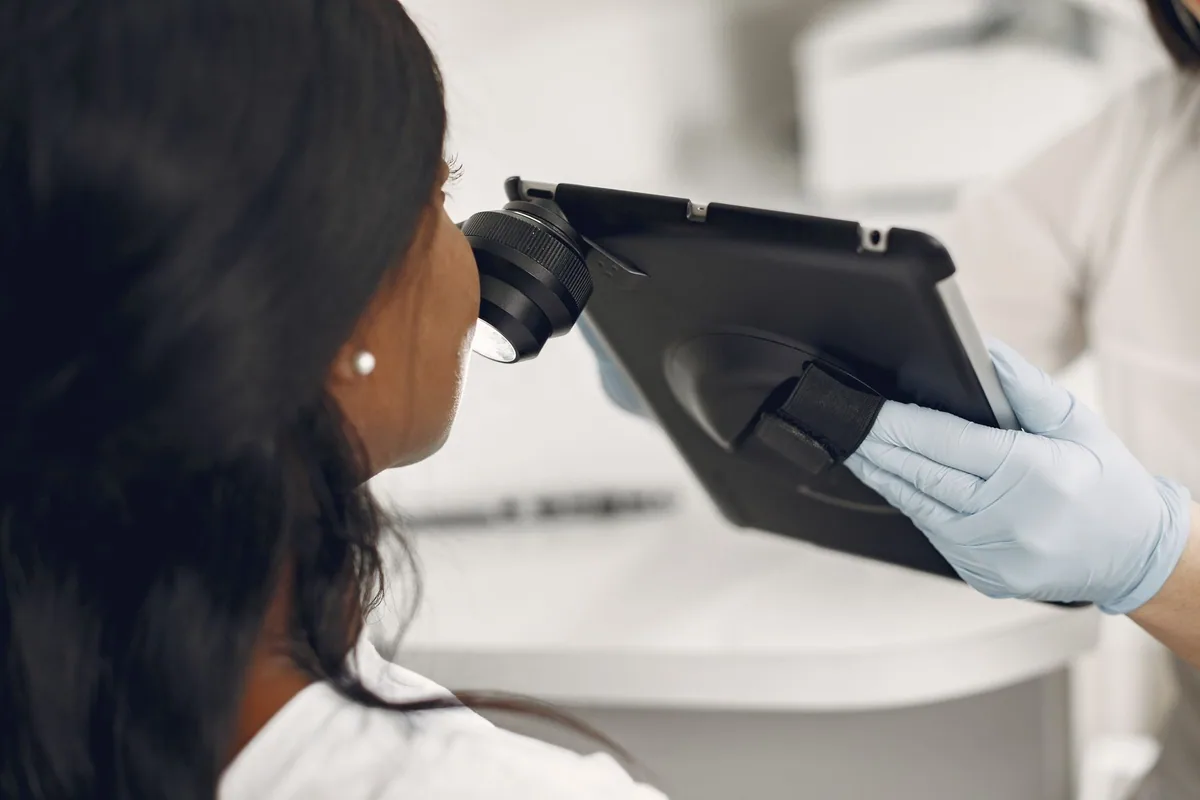
A device or a vial can look identical to the genuine article and still not be it. A photocopied certificate proves nothing — certificates photograph well and verify nothing. The only thing that actually settles the question is a check you perform, at the moment before treatment, on your own phone.
That is not modesty about our own paperwork. It is the only version of this that works when you have flown in from somewhere else — so it is how the appointment is arranged:
Scan the device
Energy devices carry a manufacturer code on the handpiece. You scan it in front of the person treating you, and you read the result yourself — not a screenshot they prepared earlier.
Scan the product
Injectables carry a traceable code on the vial or syringe. Same procedure, same rule: you scan, you read, before anything is opened onto the tray.
Check the physician
A physician practising in China holds a registration that can be looked up on the National Health Commission's public registry. We will send you the number and the lookup link before you book, so you can confirm it independently.
Keep the record
If you want it, we will record the verification and send you the clip. It is your evidence, it costs us nothing to provide, and you keep it after you fly home.
China also sets a qualification floor for who may carry out these procedures at all. The physician responsible for your treatment must hold a registered physician licence, have spent a minimum number of years in the relevant clinical specialty — three years in dermatology — and have completed formal aesthetic-medicine training or a year of supervised aesthetic practice. Those are conditions of practice rather than clinic policy, which is why the licence number we send you before you book is worth looking up rather than taking on trust.
The sequence matters as much as the checks themselves: assessment first, then a written plan and a written price, and only then is anything opened or switched on. If any part of that sequence is skipped, that is the moment to leave — here or anywhere else.
FOUR — THE MONEY
What it costs, and when you pay
Money is the second question everyone has and the one most clinics answer last. Here is the whole of it, before you ask.
- A written quotation comes first
- After your consultation you receive a written plan and a written price. Nothing is opened, injected or switched on until you have it in hand.
- That figure is the figure
- If the amount differs from what you were quoted before you flew, tell us — and you may walk away without paying anything. That is the arrangement, not a favour.
- You pay at the clinic, not in advance
- Nothing is due to hold your appointment. Payment happens on site, after the consultation and before treatment begins.
- One price, whoever you are
- The figure does not depend on where you flew in from, and there is no second schedule kept for people who arrived from abroad. Same treatment, same price, same written quotation.
- Cancel up to 72 hours before
- Plans change. Tell us at least three days ahead and you owe nothing.
We are not the cheapest option and we are not trying to be — if the lowest possible price is the deciding factor for you, we would rather say so now than have you discover it after booking. What we do promise is that the number in the written quotation is the number you pay.
FIVE — THE TRIP
Close enough to be a long weekend
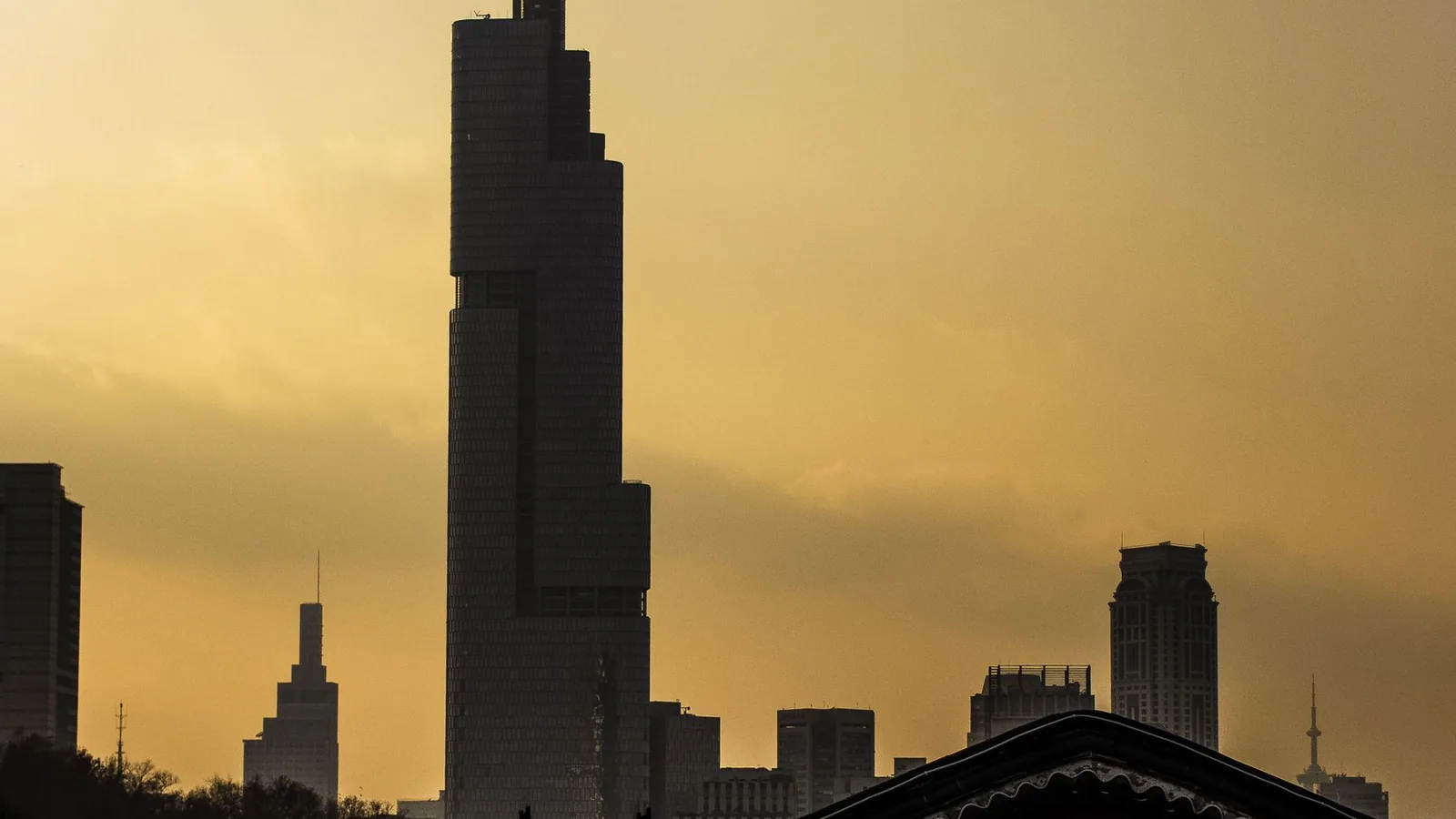
Nanjing is not a city most visitors pass through by accident — which is why it works. It is a former capital with a walled old town you can walk in an afternoon, museums that justify a day on their own, and it sits about an hour and a quarter from Shanghai by high-speed rail and a little over three hours from Beijing.
There are direct flights from six Southeast Asian cities — Singapore, Kuala Lumpur, Bangkok, Jakarta, Ho Chi Minh City and Hanoi — into Nanjing Lukou International Airport. The Hanoi route is the newest, having opened in September 2026. If you are already in the country for business, the final leg is short enough to fold into a trip you were making anyway.
What we do not do is tell you whether you can enter the country. Entry rules differ by passport and change without notice, and a clinic's website is not a substitute for your own embassy's page. What we will do is narrower and more useful: send you the documentation the clinic can lawfully provide, tell you which visa category it belongs to, and point you at the official source for the decision. The routes, their documents and the visa-free frameworks are set out on visas and entry for a treatment trip.
A trip, or a long weekend
The schedule is built around the treatment rather than the other way round, which in practice means the clinic day is a clinic day and the rest is yours. Two things make that work:
There is no general anaesthetic and no recovery period that keeps you indoors. These are non-surgical treatments — you are not bed-bound, not bandaged, and not waiting for swelling to settle before you can be seen in public.
Follow-up does not need you in the room. A physician who has examined you can review progress from photographs and a video call, and will tell you plainly if something needs to be looked at in person. A common shape for a first visit is three days — arrive and consult, treat and recover, then a final review — and most people are back at work within days of flying home.
There is something to do that is not shopping. The city wall is walkable — about 25 kilometres of the Ming original survives, including a gate with three layered barbicans and twenty-seven chambers built into it. The Nanjing Museum holds more than 430,000 objects and is one of the country's largest. The Ming Xiaoling tomb is a UNESCO World Heritage site. And Shanghai is close enough for a day trip if you want one.
What each day of a visit looks like, including how much of it is clinic time, is on your journey — and what to do with the rest of it, from the wall to the river old town, is on Nanjing between appointments. If you are still deciding whether a treatment trip to China is a reasonable thing to do at all, medical travel to China is written for that question, and planning a treatment trip covers the calendar around it.

THE HONEST PART
Who this is not for
A page arguing "why here" will happily imply that it suits everyone. It does not, and the fastest way to waste your money and our time is to find that out on arrival. So:
A good fit if you
- are looking at regenerative injectables, energy-based treatments or skin quality rather than surgery
- want to verify the device and the product yourself rather than take a clinic's word for it
- value a written price agreed before treatment over the lowest headline number
- can travel for a few days, or are already in China for another reason
Not a good fit if you
- want surgical contouring — rhinoplasty, eyelids, jaw or bone work; we do not do it, and will refer you to a partner hospital department
- are shopping primarily on price; we are not the cheapest and do not pretend to be
- need a guaranteed aesthetic result in writing; no honest clinic can give you one — what we can put in writing is everything in the four checks above
- want treatment decided on the day you arrive, without an assessment first