Crow’s feet
What are crow’s feet — and why are they so often seen as the most visible sign of aging?
Our physician’s Real Crow’s Feet Cases
The following four cases were personally treated by our physician at our Nanjing clinic, with authorization obtained via a signed Media Release Form. The key to crow’s feet injection is Preserving natural eye expression— Misplacement may result in a stiff smile or ptosis.
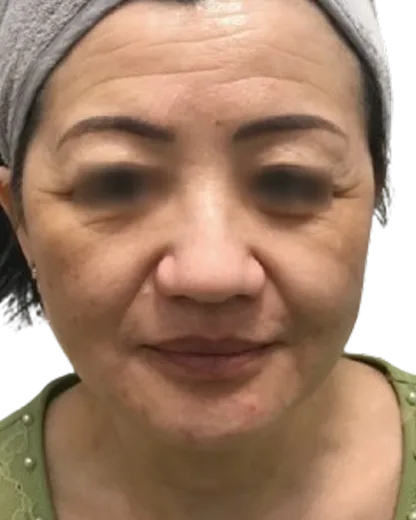
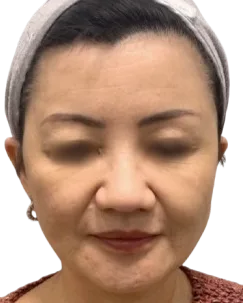
Case 1 · Real Crow’s Feet Treatment Record
- Client profile
- Asian Female · Fitzpatrick IV
- Concerns
- Crow’s Feet (Comprehensive Multi-Modal Combination Approach)
- Treatment plan
- PicoSure® + PicoSure Pro® + PicoWay® + Ultherapy® and 17 additional treatments (multiple sessions within 3 months)
- Treatment outcome
- Significant improvement in crow’s feet · Natural overall result
- Post-treatment darkening
- No PIH
- Maintenance
- 9-12 Month(s) later: filler touch-up
Case 01: Crow’s Feet — Before & After · Asian Female · Fitzpatrick IV · Multimodal combination treatment led by our physician, at Luowei Medical Aesthetics Clinic, Nanjing
What are crow’s feet — and why are they so often seen as the most visible sign of aging?
Crow’s feet are fine lines located at the lateral canthus (outer corner of the eye),Radial dynamic expression lines, Crow’s feet are caused by repeated contraction of the Orbicularis Oculi muscle. They appear prominently when smiling, squinting, or narrowing the eyes in bright light — and in more advanced cases, they remain visible even at rest as static lines. The skin around the eyes is among the thinnest on the face and has the least collagen reserve. This is why crow’s feet are often noticed earlier than glabellar lines, even when both are of similar depth — lines simply show more in thinner skin.
Why Do Periocular Lines Age You the Most?
The periocular skin is only one-third the thickness of the cheek, with considerably fewer collagen fibers and sebaceous glands. A line of the same depth appears 3–5 times more prominent around the eyes than on the cheek.
Dynamic vs. Static Lines: What’s the Difference?
Dynamic: Visible when smiling or squinting, fades at rest;Static: Lines visible at rest. Clinically, most patients under 40 present with dynamic lines; those 40 and over progressively develop mixed or static lines.
Why Do Some People Develop Crow’s Feet as Early as 25?
Genetics (naturally lower collagen density) + chronic squinting habits (screen use / outdoor work) + cumulative UV exposure. Asian faces tend to have a narrower palpebral fissure, meaning the orbicularis oculi muscle is used more frequently.
Is Botox® for Crow’s Feet High-Risk?
Yes — but the risk is extremely low when injection placement is precise. The periorbital area is muscle-dense, and diffusion of Botox® into the levator palpebrae superioris can cause Ptosis (upper eyelid droop). Our physician’s protocol includes≥ 1 cm from the orbital rim… injection, significantly reducing risk.
The 5 Main Causes of Crow’s Feet
1. Repeated orbicularis oculi muscle contraction (primary cause)
Every smile, blink, and squint activates the Orbicularis Oculi. The skin around the eyes is thin → creases accumulate rapidly.
2. Cumulative UV exposure
UV Accelerates collagen breakdown. Many Asian women do not apply adequate sun protection around the eyes, and most eye creams do not contain sufficient SPF.
3. Screen use / dry eyes
Prolonged screen time causes compensatory squinting. Patients with dry eye syndrome tend to develop crow’s feet at an earlier age.
4. Periorbital skin is thin with limited collagen
Periocular epidermal thickness is approximately 0.5 mm (compared to 1.5 mm on the cheek), with the lowest collagen reserve of any facial zone — meaning lines appear deepest here under the same expression.
5. Facial expression habits
Individuals with expressive smiles develop crow’s feet earlier, but Clinically, reducing smiling is never recommended as a solution. Botox … let you smile freely without visible lines.
4 Periocular Concerns Commonly Confused with Crow’s Feet
Lower Eyelid Fine Lines (Tear Trough Lines)
Lower eyelid radiating lines · age-related pattern
| Placement | Lower eyelid margin |
|---|---|
| Direction | Short horizontal lines (radiating crow’s feet pattern) |
| Trigger | Visible even at rest |
| First-choice treatment | Periocular filler brightening + Sofwave™ |
Tear trough / dark circles
Lower eyelid volume loss
| Placement | Medial lower eyelid |
|---|---|
| Direction | Vertical groove |
| Trigger | Static |
| First-choice treatment | Tear trough filler |
Eye Bags
Orbital septum laxity · fat herniation
| Placement | Lower eyelid protrusion |
|---|---|
| Direction | Protrusion, not hollowing |
| Trigger | Static |
| First-choice treatment | Sofwave / Surgical blepharoplasty (eye bag removal) |
Periocular Laxity (Eyelid Laxity)
Skin laxity · age-related type
| Placement | Upper eyelid / lateral canthus |
|---|---|
| Direction | Sagging |
| Trigger | Static |
| First-choice treatment | Sofwave / Fotona / Eyelid lifting |
Special Considerations for Crow’s Feet in Asian Faces
The Problem with Standard North American Protocols
Common issues with applying the standard North American Allergan 3-point protocol (12–24 units per side) to Asian faces:
- ✗Excess dosing → stiff smile, loss of natural eye expression
- ✗Placement too far inward → Botox® diffuses into the levator palpebrae superioris
- ✗Unilateral imbalance left uncorrected
Our physician’s Asian Face Protocol
| Parameters | North American standard | Asian-specific adjustment |
|---|---|---|
| Dosage | 12-24 U / side | Female 8–12 U · Male 12–15 U |
| Injection point | 3 points | 3 Points + personalized angle |
| Distance from orbital rim | Not strict enough | ≥ 1cm Prioritize safety |
| Depth | Subcutaneous | Superficial dermis (shallow injection reduces ptosis risk) |
| First session | full dose | Conservative dosing + 2-week follow-up |
Key differences:The injection goal for Asian faces is “Smile freely without visible lines — while preserving your natural eye expression”. Our physician’s protocol uses doses that are 30–50% more conservative, avoids medial placement, and maintains a superficial injection depth — collectively minimizing the risk of ptosis.
5 Treatment Options for Crow’s Feet
Botox® 3-point protocol
Three precisely placed injections per side (at the 12, 3, and 6 o’clock positions of the lateral canthus). Our physician has extensive experience in dose adjustment for Asian faces.First-line treatment for dynamic crow’s feet.
Dysport / Xeomin / Letybo
Multiple product options available. Dysport® works fastest (3–5 days); Xeomin® carries the lowest risk of antibody formation; Letybo® offers excellent value. Our physician selects the most suitable option based on your individual response.
Sofwave Periocular tightening
SUPERB Ultrasound technology for non-invasive tightening of periocular laxity.Essential for deep static lines combined with laxity. Botox Addresses dynamic lines; Sofwave™ addresses static structural changes.
Eye-brightening filler injection
A small volume of superficially placed filler in the lower eyelid area to soften fine lines and improve skin quality. Juvéderm® Volbella and Skinvive are well suited for this delicate zone.
Fotona 4D Periorbital lifting
1064nm + 2940nm Dual-wavelength technology with intraoral and extraoral multi-directional delivery, addressing overall periocular laxity and fine lines.
Our physician’s 5-Step Crow’s Feet Treatment Process
Consultation + dynamic/static assessment
30 Minute free consultation. Our physician will ask you to smile, squint, and relax to assess Orbicularis Oculi activity and the degree of static damage — determining whether Botox® alone or a combination approach is most appropriate for you.
Personalized placement + dosage
3 Point placement + ≥ 1 cm from the orbital rim + superficial dermal layer. Our physician personalizes each treatment based on palpebral fissure width, wrinkle pattern, sex, and bone structure.All injectable treatments are performed by the physician directly.
Injection (1–2 minutes per side)
30G Ultra-fine needles make the treatment virtually painless. A pre-injection ice pack can further minimize discomfort. Mild redness or slight elevation at the injection site typically resolves on its own within 30 minutes.
2 Week follow-up
2 Return visit after weeks to assess symmetry and results. If unilateral imbalance is noted, a minor touch-up will be administered.Under-treatment can be corrected; over-treatment cannot be undone quickly.
3-4 Month maintenance
Women typically need a touch-up every 4–5 months; men every 3–4 months. Long-term clients who have achieved stable results may extend intervals to 5–6 months.
Treatment timeline
| Timing | Presentation | Recommendation |
|---|---|---|
| Day of injection | Mild wheal and redness, resolving within 30 minutes | 4 Hours: do not lie flat / do not rub the area / avoid strenuous exercise |
| 3-5 days | Dysport Onset | Normal daily activities |
| 5-7 days | Botox / Xeomin Onset | Avoid massaging the periorbital area |
| 2 weeks | Full results visible | Follow-up reassessment + opportunity for fine-tuning |
| 3-4 months | Effect begins to diminish | Maintenance planning |
Are You a Candidate for Crow’s Feet Treatment?
✅ Suitable for
- ✓18+(Clinically, onset is typically from age 25+)
- ✓Dynamic lines or mixed dynamic + static lines
- ✓Healthy periocular skin
- ✓Aligned with the goal of “reducing visible lines when smiling while preserving natural eye expression”
- ✓Comfortable with a 3–4 month maintenance interval
- ✓No active ocular inflammation
❌ Not suitable, or must be addressed first
- ✗Pregnancy / breastfeeding
- ✗Ptosis (may worsen following injection)
- ✗Active ocular infection / blepharitis
- ✗Neuromuscular disorders
- ✗History of neurotoxin allergy
- ✗Significant periocular laxity (Sofwave™ or surgery recommended first)
Luowei Physician-Led Aesthetic Clinic vs. Typical MedSpa
- ✗Injections performed by nurses or trainee physicians
- ✗Standard 3-point cookie-cutter protocol
- ✗Applying North American dosing to Asian faces
- ✗Insufficient distance from the orbital rim
- ✗No 2-week follow-up provided
- ✗No protocol for managing complications such as ptosis
- ✓3 Points + personalized angle + depth
- ✓Asian face-specific dosing
- ✓Safe distance ≥ 1 cm from the orbital rim
- ✓2 Week follow-up + fine-tuning
- ✓Immediate complication management (Apraclonidine emergency protocol)
Why is Luowei Medical Aesthetics Clinic a trustworthy source for crow’s feet information and treatment?
Experience
Expertise
Authoritativeness
Published author · multi-brand official certification
Trustworthiness
2 Week follow-up · Physician-administered injection · Complication management capability
About the Cost of Crow’s Feet Injections
Prices for “crow’s feet Botox” can vary considerably from clinic to clinic. The difference is not in the product itself — Botox®, Dysport®, Xeomin®, and Letybo® are all NMPA-registered, standardized neuromodulators. The real difference comes from Who assesses the anatomy, who performs the injection, and how deeply clinical judgment is involved throughout the process. The safety margin for periorbital injections is considerably narrower than for glabellar lines. Maintaining a distance of ≥ 1 cm from the orbital rim, injecting at a superficial depth, and using conservative dosing are non-negotiable medical principles. All injectable treatments at our clinic are performed by the physician directly — never delegated to a Registered Nurse. Here is why:The key to periocular injection is placement precision, Misplacement by even a millimeter can cause ptosis or a stiff smile — precision like this comes from 8 years of clinical experience and a deep understanding of anatomy, not simply “injection technique.” The gap in laser outcomes comes down to physician vs. technician clinical experience; the gap in injection outcomes comes down to placement accuracy. Which brand, what dosage, and how many injection points — these decisions are guided by your periorbital anatomy and past responses, not by price.
- Payment is made at the clinic, after the consultation and before treatment begins
- Nothing is paid in advance, and no deposit is required to hold an appointment
- Cosmetic treatment is a self-pay item and is not covered by public medical insurance in China
- All first-time clients receive a complimentary 30-minute Free Consultation and assessment
Risks & Contraindications
What Are the Main Risks?
1. Ptosis (upper eyelid droop)— Rare but possible; misplaced, too-deep, or diffused product reaching the levator palpebrae muscle can cause ptosis (reversible, resolves in 4–12 weeks). 2. Difficulty blinking (rare). 3. Minor bruising (resolves within a few days). 4. Mild redness/swelling at the injection site (resolves within 30 minutes). 5. Stiff smile (from excess dosage; resolves within 2–3 months). Our physician’s protocol — maintaining ≥ 1 cm from the orbital rim, injecting at a superficial depth, and using conservative dosages — significantly reduces these risks.
What should we do after our injections?
4 Hours: Do not lie flat / do not rub the eye area / avoid strenuous exercise / avoid the gym / avoid eye makeup. 24 hours: avoid alcohol / avoid aspirin / avoid saunas. 7 days: avoid massaging the eye area / consult before wearing contact lenses. These precautions prevent the product from diffusing into unintended muscles.
What should we do if we develop ptosis?
Contact our physician immediately. Clinical management includes: (1) Apraclonidine eye drops (an alpha-adrenergic agonist that can temporarily lift the eyelid by 1–3 mm) to relieve symptoms; (2) allowing the product to metabolize naturally (full recovery within 4–12 weeks); and (3) close follow-up monitoring.Our physician has a structured complication-management protocol in place — most medspas do not..
How soon will we see results — and how long will they last?
Onset: Dysport® 3–5 days · Botox®/Xeomin® 5–7 days. Full effect visible at 14 days. Duration: 4–5 months for women, 3–4 months for men. Long-term clients who have reached a stable baseline may extend to 5–6 months.
Where the medical claims on this page come from
Everything above about Crow’s feet rests on published evidence rather than on our own word. The sources below are the ones behind those statements: peer-reviewed papers indexed in PubMed, and guidance written for patients by dermatology academies and national health services. Read them before you decide — and bring any of them to your consultation.
- Peer-reviewedBotulinum toxin type A for facial wrinkles
- Patient guidanceBotulinum toxin: Overview
What these references can and cannot tell you. They describe what is known about the treatment itself — how well it tends to work, how long results last, and what can go wrong. They are not an assessment of this clinic, and no published study can tell you whether it suits your skin type, anatomy, or medical history. That judgement comes from the physician who examines you in person, and it may well be “not this one”.