Glabellar Lines / “11” Lines
What are glabellar lines / “11” lines? Why are they considered the earliest sign of facial aging?
Our physician’s Real Patient Cases: Glabellar Lines / “11” Lines
The following four cases were personally treated by our physician at our Nanjing clinic and are shared with signed media release authorization. The key to effective glabellar line treatment is not the dosage — it lies in Precise placement— A placement error of just 1 mm can cause ptosis or an unnaturally stiff expression.
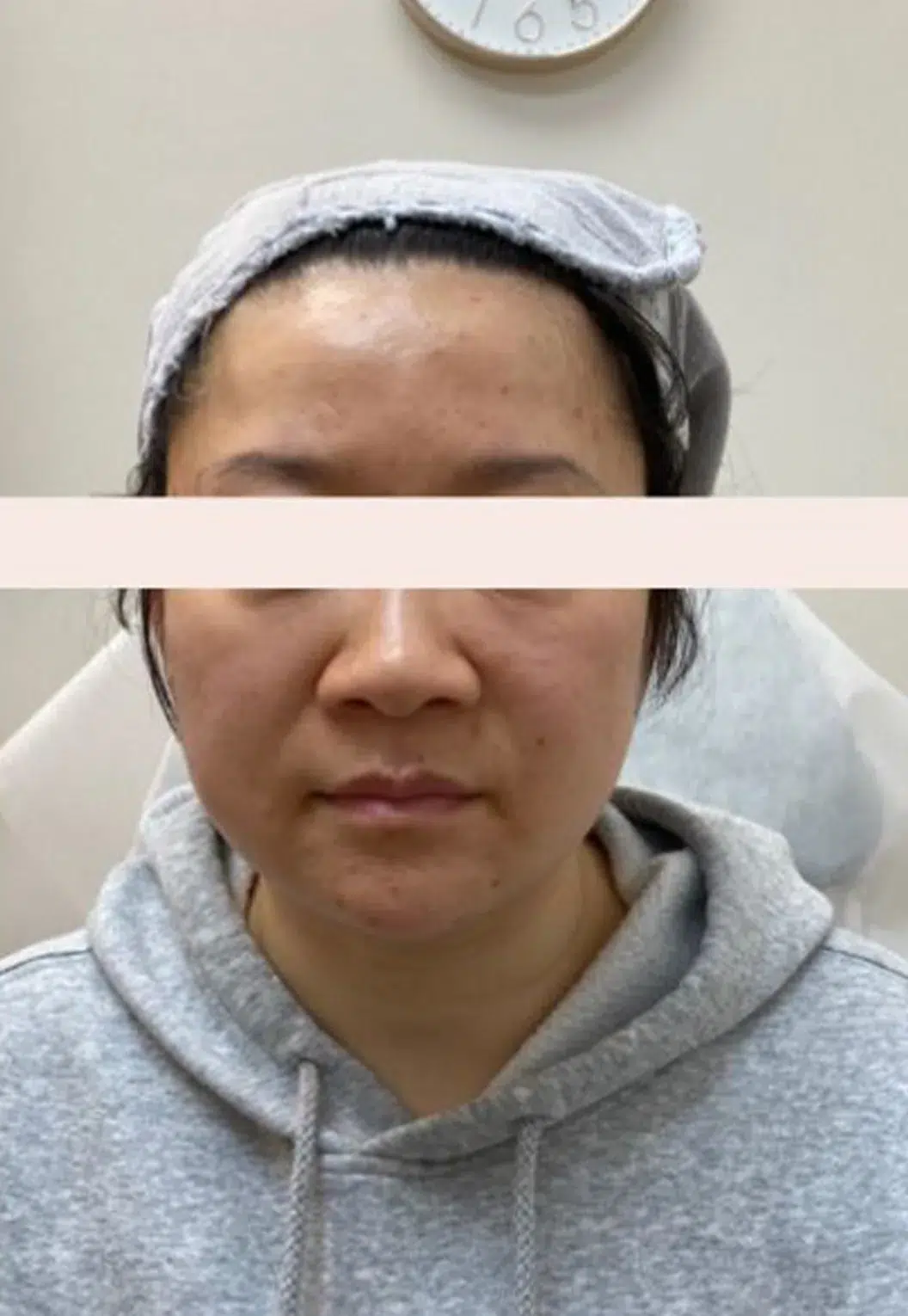
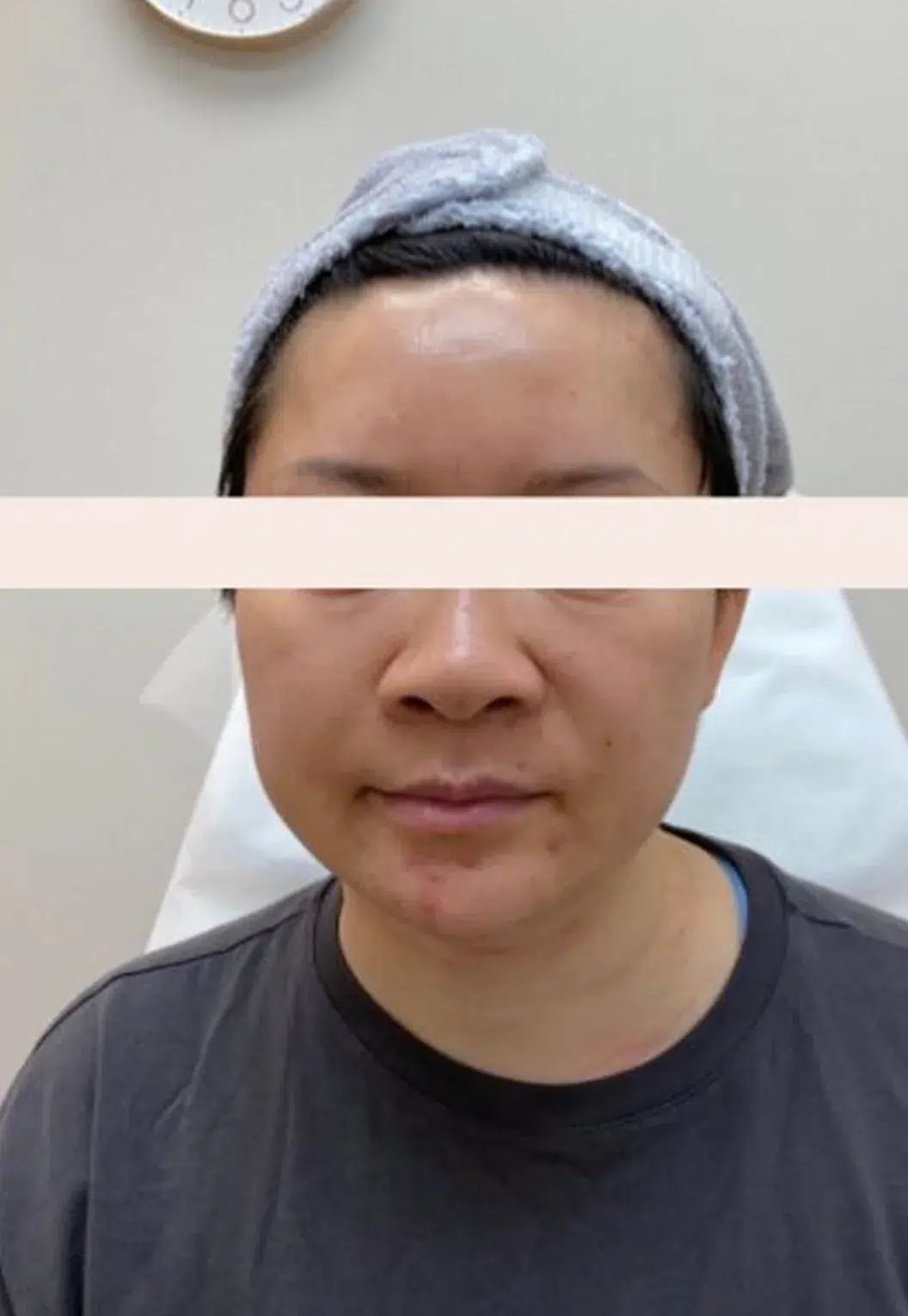
Case 1 · Glabellar Lines / “11” Lines — Documented Results
- Client profile
- Asian Female · Fitzpatrick IV
- Areas of concern
- Glabellar Lines / “11” Lines (Comprehensive Improvement with Multimodal Combination Therapy)
- Treatment plan
- Botox® + neurotoxin wrinkle treatment + forehead volumizing + Juvéderm® and 5 other procedures (multiple sessions within 3 months)
- Treatment outcome
- Visible improvement in glabellar lines / “11” lines · Natural overall result
- Post-treatment darkening
- No PIH
- Maintenance
- Annual energy-based maintenance treatment + at-home retinoid regimen
Case 01: Glabellar Lines / “11” Lines — Before & After · Asian Female · Fitzpatrick IV · Multimodal Combination Treatment led by our physician at Luowei Medical Aesthetics Clinic, Nanjing
What are glabellar lines / “11” lines? Why are they considered the earliest sign of facial aging?
Glabellar lines — commonly known as “11” lines — are the vertical creases located between the eyebrows Vertical expression lines, Caused by repeated contraction of the corrugator supercilii and procerus muscles. It is clinically one of the earliest Dynamic aging signal among the earliest to appear, often becoming noticeable in the mid-to-late twenties. They deepen with frowning, concentration, or stress, and in more advanced cases leave a permanent “11” imprint even at rest.
Why is it considered the “earliest sign of aging”?
The corrugator supercilii is one of the most frequently used mimetic muscles in the face, contracting thousands of times each day — accumulating wear far faster than other facial muscles.
Dynamic vs. static: what is the difference?
Dynamic: Visible when frowning, absent at rest → Botox alone is sufficient;Static: Structural skin changes present — groove visible at rest → Botox® + dermal filler combination recommended.
Why do we look stern or unapproachable?
Deep glabellar lines create the appearance of a frown even at rest — the brain reads this as displeasure. Many clients present with the concern that colleagues perceive them as constantly unhappy; glabellar lines are most often the cause.
What happens if left untreated?
Dynamic lines gradually become static. Dynamic lines at 30 → mixed lines at 40 → structural dermal damage at 50 requiring filler or Sculptra to restore.The cost of early intervention is far lower than late-stage correction..
5 Main Causes of Glabellar Lines
1. Overuse of mimetic muscles (primary cause)
Thousands of daily contractions of the corrugator muscles → repeated folding of the overlying skin → accumulation of collagen breakdown in the dermis → formation of lines.
2. Cumulative UV exposure
UV accelerating collagen breakdown and causing dynamic lines to become static ones sooner.
3. Screen use and eye strain habits
Prolonged screen time and eye strain cause compensatory frowning, accelerating line formation.
4. Facial expression habits
Those who are emotionally expressive or whose work demands a consistently serious demeanor — such as physicians, lawyers, and designers — tend to develop these lines earlier.
5. Natural aging
30 After this age, collagen decreases by approximately 1% per year and skin elasticity declines — resulting in deeper lines from the same facial expressions.
4 types of lines commonly confused with glabellar lines
Forehead Lines
Horizontal frontalis lines
| Placement | Horizontal forehead |
|---|---|
| Direction | Horizontal (glabellar lines are vertical) |
| Muscle | Frontalis muscle |
| Trigger | Visible when raising the brows |
| First-line treatment | Botox Horizontal placement pattern |
Crow’s Feet
Periorbital radial lines
| Placement | Lateral canthus |
|---|---|
| Direction | Radial |
| Muscle | Orbicularis oculi |
| Trigger | Smiling / squinting |
| First-line treatment | Botox 3 point protocol |
Short vertical lines at the medial brow
Unilateral · habitual expression
| Placement | Single medial brow |
|---|---|
| Direction | Short and vertical (glabellar lines are longer and bilaterally symmetric) |
| Muscle | Ipsilateral corrugator supercilii |
| Trigger | Unilateral expression |
| First-line treatment | Small-dose Botox on the same side |
Nasal root horizontal lines / Bunny Lines
Diagonal nasal root lines
| Placement | Both sides of the nasal root |
|---|---|
| Direction | Oblique |
| Muscle | Nasalis muscle |
| Trigger | Visible when scrunching the nose |
| First-line treatment | Micro-dose Botox at the nasal root |
Special considerations for glabellar line treatment in Asian faces
The problem with standard North American protocols
The standard North American Botox protocol (Allergan) was developed based on Caucasian facial anatomy. Applying it directly to Asian faces commonly leads to 3 problems:
- ✗Asian patients have thinner soft tissue below the brow → placement errors more readily cause ptosis
- ✗Standard dosing is excessive for smaller-boned Asian faces
- ✗“Natural without looking frozen” is central to Asian aesthetics — subtle facial expressions must be preserved
Our physician’s Asian Facial Aesthetics Protocol
| Parameters | North American standard | Asian-specific adjustment |
|---|---|---|
| Injection points | 5 Placement too high / too low | 5 Precise point placement |
| Dosage | 20-25 U | Women 12–18 U / Men 20–30 U |
| Depth | Intramuscular | Mid-muscle placement (to avoid ptosis) |
| Margin | Not emphasized | ≥ 1 cm from the brow margin |
| First session | full dose | Conservative dosage, 2-week follow-up |
The core goal is always a natural, non-frozen result — where colleagues notice you look refreshed, not that you’ve had Botox®.
5 Treatment Options for Glabellar Lines
Botox®
Allergan The originator product and most widely used neurotoxin in North America. Our physician.First-line treatment for dynamic glabellar lines.
Dysport®
Galderma Originator product with faster onset (3–5 days) and slightly wider diffusion radius. Suitable for Requires faster onset or patients who have developed antibodies to Botox.
Xeomin®
Merz Original formulation with a “naked protein” composition (no complexing proteins), theoretically associated with lower antibody formation. Well suited for long-term injection clients.
Letybo®
NMPA-registered. Clinical results are comparable to Botox®, making it an excellent option for budget-conscious clients.
Botox + Dermal filler / Sculptra®
For deep static glabellar lines, Botox® alone is not sufficient. A Juvéderm Superficial filler to smooth the groove or combined with Sculptra for long-term collagen stimulation.
Our physician’s 5-Step Glabellar Line Treatment Protocol
Consultation + dynamic / static line assessment
30 minute free consultation. Our physician will ask you to make various facial expressions to assess corrugator muscle activity, distinguish dynamic from static lines, and determine whether Botox® alone or a combination approach is right for you.
Personalized placement mapping + individualized dosage
5 Precise placement at 5 points (4 points in the corrugator supercilii + 1 point in the procerus). Our physician adjusts dosage based on bone structure, sex, and prior response.All injectable treatments at our clinic are performed by the physician — no exceptions..
Injection (2–5 minutes)
30G Ultra-fine needles make the procedure virtually painless. A brief ice pack application beforehand can further minimize discomfort. Mild redness or slight raised areas at injection sites typically resolve within 30 minutes.
2 week follow-up + fine-tuning
2 Return for a follow-up assessment after two weeks. Any asymmetry or residual muscle activity can be addressed with a small touch-up at that time.A conservative starting dose is always preferable to over-treatment..
3-4 month maintenance
Women typically return every 4–5 months; men every 3–4 months. Long-term clients who have achieved stable results may extend their interval to 5–6 months.
Treatment Timeline
| Timing | Presentation | Recommendation |
|---|---|---|
| Day of treatment | Slight raised areas / mild redness, resolving within 30 minutes | 4 Avoid lying flat, rubbing the area, or exercising for the first few hours |
| 3-5 days | Dysport Onset of results | Resume normal activities |
| 5-7 days | Botox / Xeomin Onset | Avoid massaging the injection area |
| 2 weeks | Full results visible | Follow-up assessment + touch-up if needed |
| 3-4 months | Results begin to fade | Planning maintenance injections |
Am I a Candidate for Glabellar Line Treatment?
✅ Suitable for
- ✓18+(Clinically, typically begins in the mid-20s)
- ✓Dynamic or mixed dynamic + static glabellar lines
- ✓Healthy facial skin
- ✓Comfortable with a 3–4 month maintenance schedule
- ✓Seeking a natural, non-frozen result
- ✓Goal of reducing a stern or unapproachable appearance
❌ Not suitable or treatment should be deferred
- ✗Pregnancy / breastfeeding
- ✗Neuromuscular disorders (e.g., myasthenia gravis)
- ✗Active infection at the injection site
- ✗Known allergy to neurotoxins or protein components
- ✗Expecting a completely frozen, expressionless result (unrealistic expectation)
- ✗Significant ptosis (will worsen post-injection)
Luowei Physician-Led Clinic vs. Standard MedSpa
- ✗Nurse / Resident injection
- ✗Standard 5-point cookie-cutter protocol
- ✗Single brand (typically Botox®)
- ✗Applying standard North American dosing to Asian faces
- ✗No 2-week follow-up included
- ✗no capacity to manage complications such as brow ptosis
- ✓5 Point-specific placement + individualized depth and angle
- ✓Botox / Dysport / Xeomin / Letybo Multiple product options available
- ✓Asian facial aesthetics dosing protocol
- ✓2 week follow-up + opportunity for fine-tuning
- ✓Immediate management of complications (reversal agent when necessary)
Why trust Luowei Medical Aesthetics Clinic for glabellar line treatment?
Experience
Expertise
Authoritativeness
Published author · Multi-brand official certification
Trustworthiness
2 2-week follow-up included · Physician-administered · Complication management capability
About the Cost of Glabellar Line Treatment
Prices for “glabellar Botox” can vary significantly from clinic to clinic — and the difference has nothing to do with the product itself. Botox®, Dysport®, Xeomin®, and Letybo® are all NMPA-registered standard products. The real difference comes from who performs the assessment, who performs the injection, and how deeply clinical experience informs each step of the process. All injectable treatments at our clinic are performed by the physician personally — this is not an option but a core medical principle. The reason is simple: precision placement is everything with glabellar lines. A 1 mm deviation can cause ptosis; a 2 mm deviation can distort the brow arch. That level of accuracy depends on clinical judgment, not equipment.The difference in laser outcomes comes down to the clinical experience gap between physician-performed and technician-performed treatments. The difference in injection outcomes comes down to placement precision.The choice of neurotoxin brand, dosage, and injection points is determined by your muscle anatomy and past response — not by price. Your personalized plan will be discussed in detail during the consultation.
- Payment is made at the clinic, after the consultation and before treatment begins
- Nothing is paid in advance, and no deposit is required to hold an appointment
- Cosmetic treatment is a self-pay item and is not covered by public medical insurance in China
- All new clients receive a complimentary 30-minute Free Consultation assessment
Risks & Contraindications
What are the main risks?
1. Ptosis (upper eyelid/brow droop)— Rare; caused by placement that is too low or injection that is too deep. 2. Temporary brow asymmetry (minor adjustment possible within 2 weeks). 3. Mild redness or swelling at the injection site (resolves within 30 minutes). 4. Allergic reactions in extremely rare cases. 5. Headache or flu-like symptoms (< 1%, resolves on its own within a few days). Our precise placement protocol significantly reduces this risk.
What should we avoid after treatment?
4 Within the first few hours: avoid lying flat, rubbing the treated area, strenuous exercise, saunas or steam rooms, and applying makeup. Within 24 hours: avoid alcohol and blood-thinning medications (such as aspirin). These precautions help prevent the product from migrating beyond the intended treatment area.
When will we see results? How long will they last?
Onset: Dysport 3–5 days · Botox / Xeomin 5–7 days · Letybo 5–7 days. Full results appear at 14 days. Duration: 4–5 months for women, 3–4 months for men. Long-term clients who have reached a stable baseline may extend to 5–6 months.
Can antibodies develop?
In extremely rare cases, long-term high-dose injections may lead to the development of neutralizing antibodies, causing a reduction in efficacy (clinical incidence < 1%). Xeomin “"naked protein" formulation theoretically carries the lowest risk of antibody formation. If antibody development is suspected, our physician will recommend switching brands or pausing treatment for 6–12 months.
Where the medical claims on this page come from
Everything above about Glabellar Lines / “11” Lines rests on published evidence rather than on our own word. The sources below are the ones behind those statements: peer-reviewed papers indexed in PubMed, and guidance written for patients by dermatology academies and national health services. Read them before you decide — and bring any of them to your consultation.
- Peer-reviewedBotulinum toxin type A for facial wrinkles
- Patient guidanceBotulinum toxin: Overview
What these references can and cannot tell you. They describe what is known about the treatment itself — how well it tends to work, how long results last, and what can go wrong. They are not an assessment of this clinic, and no published study can tell you whether it suits your skin type, anatomy, or medical history. That judgement comes from the physician who examines you in person, and it may well be “not this one”.