EATING
What to eat in Nanjing
Nanjing cooks differently from the China most visitors picture. It is a savoury city rather than a chilli one, and its cooking is built around the duck. That makes it unusually easy eating for a first trip — and unusually easy to plan around a clinic appointment.
Your physician's instructions come first. If you are given dietary restrictions after treatment, they override everything on this page.
It is gentle food. Mild, mostly braised or steamed, rarely spicy. The local heat level suits most visitors without adjustment.
You do not need to plan hard. Good versions of everything sit within a few minutes of the centre. The city eats well without a reservation.
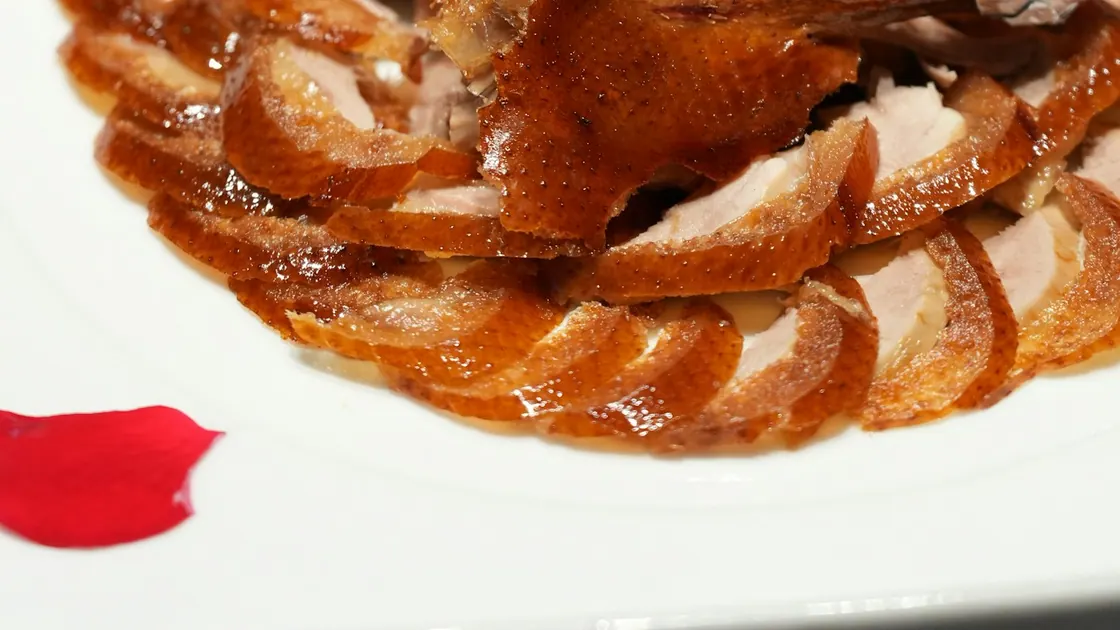
THE SIGNATURE
The duck, in three forms
Ask anyone in Nanjing what the city eats and you will get one answer. It appears in three main guises, and all three are worth having at least once.
Salted duck
The city's signature, and the thing to try first. It is served cool, not hot, and it is quietly salty rather than aggressively so — the salt is there to season the meat, not to dominate it. Every neighbourhood has its own version, and the local, unfussy ones are usually the best. Ask for it by the portion rather than by the bird; a quarter is plenty for one person.
Duck-blood vermicelli soup
The everyday bowl the city actually runs on, and a better introduction to how Nanjing eats than any restaurant dish. Duck blood curd, slivers of duck intestine and liver, and glass noodles in a duck broth, topped with coriander and chilli oil you add yourself. It is a snack or a light meal, it is cheap, and it is everywhere — from street stalls to shopping-mall food floors. Leave the chilli oil off and it is a very mild bowl.
Roast duck, dressed to order
The third form, and the one to buy from a shop counter rather than to sit down to. Nanjing's roast duck is typically sold from storefronts that will chop and dress it for you, and it travels well — a useful thing to know if you would rather eat quietly in your hotel on the evening of a clinic day.
How to order duck without a menu. Point at what is hanging or displayed, say how many people are eating, and let the shop decide the portion — this is completely normal and it is how the person in front of you is doing it. Pay with your phone wallet or cash; the small, good, local shops are the least likely to take a foreign card.
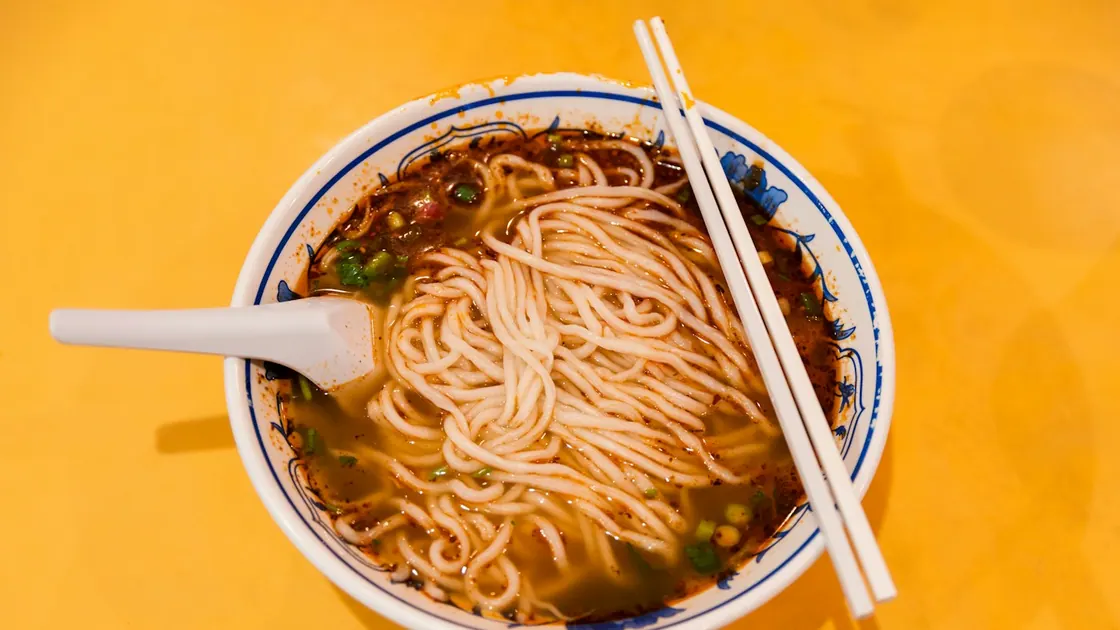
The everyday bowl
Noodles in broth, mild until you add the chilli oil yourself. Breakfast, lunch or a light dinner.
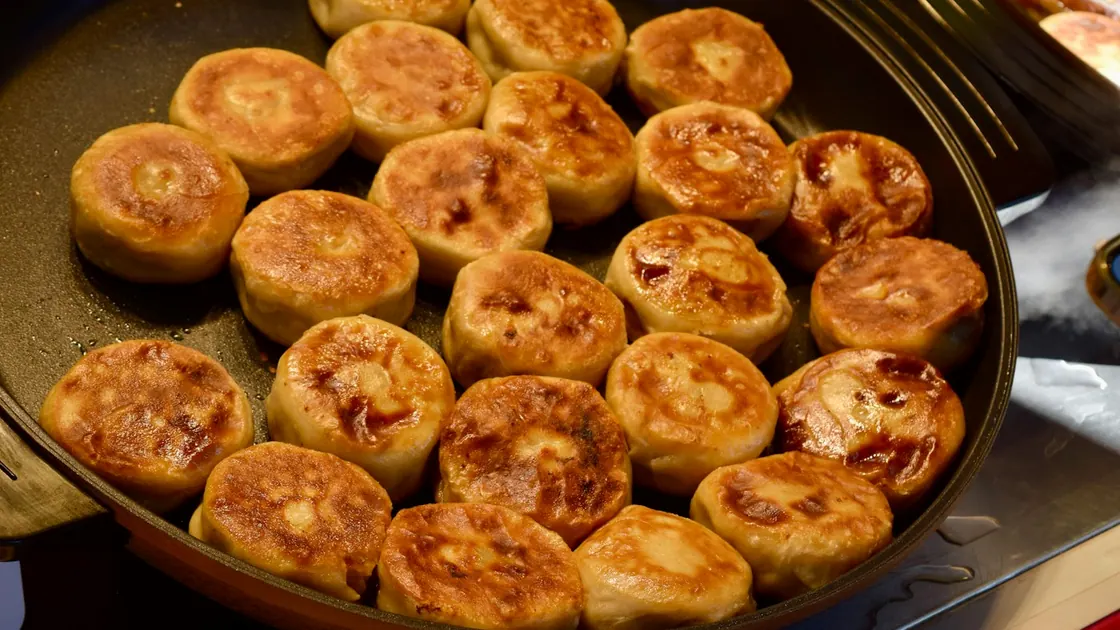
Pan-fried on the street
The old-town snack streets are built for grazing. Follow the queue rather than a list.
THROUGH THE DAY
What to eat, and when
Organised the way you will actually meet the food, rather than as a list of dishes to hunt down.
Breakfast
This is the meal Nanjing does best and visitors skip most often. Look for tangbao — soup dumplings, the local breakfast staple — or a bowl of noodles, which is a completely normal thing to eat at 8am here. Breakfast places are busy early, cheap, and happy to serve someone pointing at the next table.
Tangbao, and the one technique
Soup dumplings are eaten in a specific order for a specific reason: nip the skin, sip the soup, then eat the rest. Bite straight into one and you will scald the roof of your mouth — it is the single most common food injury visitors inflict on themselves here. A spoon helps. Let them cool for a moment after they arrive.
Lunch and dinner
Both are unfussy. A neighbourhood restaurant serving braised dishes, a bowl of noodles, or a plate of lion's head meatballs — large, braised, and much lighter than the name suggests — is a normal good meal rather than a compromise. Portions are generous; two dishes between two people is usually enough.
Snacks in the old town
The streets around the Confucius Temple are built for grazing: sweet rice cakes, sesame pastes, pan-fried buns, and a long list of things on sticks. Graze rather than sit — the point of the area is the walking. It is at its best after dark, when the lanterns are on and the river is lit.
Noodles, another way
Pidu noodles are the local speciality in this direction: springy noodles in broth topped with crisp fried pork skin, which softens as it sits. It is a bowl with texture, and one of the more distinctly Nanjing things you can order without any help.
By season
Nanjing eats with the calendar. Spring brings wild vegetables — the local one is a tender reed shoot eaten stir-fried with a little pork. Autumn brings osmanthus, which turns up in sweet things and in drinks. If you are here in either season, order whatever the menu is pushing; that is what is good this week.
WHERE TO GO
Finding food without a guide
Deliberately no restaurant names on this page — the good ones change, and we are not in the business of sending you to a specific business. Here is how to find your own.
- Eat where the queue is local. The most reliable single signal anywhere in the city. If the people waiting are speaking Chinese and the queue is moving, you have found something.
- Near the Confucius Temple for grazing. The old-town snack streets, best after dark. Expect crowds and commercial noise; that is the trade for having everything in one walk.
- Xinjiekou for convenience. The central commercial district has the widest and least intimidating spread — shopping-mall food floors, chains with picture menus, and air-conditioning. A good fallback on a hot day or a low-energy evening.
- Neighbourhood streets for the real thing. Any ordinary block away from the sights will have a duck shop, a noodle place and a breakfast place. This is where the city actually eats, and it is usually within a few minutes of wherever you are staying.
- Look for picture menus, or nothing at all. Both are fine. Picture menus and phone translation handle the first visit to a new place; after that, pointing at what someone else is eating works anywhere.
On payment and water: small food shops increasingly run on phone wallets, so set yours up before you arrive — China on the ground covers how. Tap water is not for drinking; bottled or boiled is the norm, and teahouses will refill a flask.
AROUND AN APPOINTMENT
Eating around treatment
Start here: if your physician gives you dietary restrictions after treatment, those are the binding ones. What follows is general, and it does not override anything you are told in person or in writing.
- Nothing here needs planning around. These are non-surgical treatments with no general anaesthetic, so there is no fasting requirement tied to this page — if a treatment of yours does need you to fast, that will be told to you directly and not left to a travel guide.
- Gentle is easy to find. Noodles, braised dishes, rice and steamed things are everywhere, which makes a low-key evening after a clinic day straightforward rather than a compromise. A bowl of soup at the hotel or a quiet noodle shop beats an ambitious dinner.
- Watch the chilli oil, not the cuisine. Nanjing food is mild by default, but condiments on the table are how heat arrives — chilli oil in a soup, chilli paste in a dip. Add it yourself and you control it entirely.
- Salted things are the local default. Salted duck, cured meats and pickles are the character of this cooking. If you have been advised to watch your salt, order the fresh dishes and vegetables and treat the signature as a taste rather than a portion.
- Alcohol is a separate question. Ask your physician rather than us. It is a clinical question and it belongs with the clinical answer, not with a restaurant list.
- Say it in writing. If a restriction matters, the cleanest way to communicate it is a translated card on your phone stating exactly what you cannot have. Show it before ordering, not after the food arrives.
And it all sits close together. The food worth eating is not a day trip away from the clinic. Whatever your coordinator sets up, there is a good, mild, unfussy meal within a few minutes of it — and on the days around an appointment, that is usually the meal you actually want.
NEXT
The rest of the city
No deposit. No prepayment. You pay at the clinic.
You pay after your in-person consultation, before treatment begins. The price we quote online is the price you pay — in writing.
We do not share the medical details you enter here with advertising platforms.