Brow Ptosis / Heavy Brows
Brow ptosis refers to a descent of the brow position relative to its youthful height.
Our physician’s Real Before & After Cases: Brow Ptosis & Heavy Brows
The following four cases were personally assessed and treated by our physician at our Nanjing clinic and are shared with patient authorization via Media Release Form. Brow ptosis has complex, multi-factorial causes — bone structure, skin quality, muscle dynamics, and fat pads — and individual outcomes vary. Results should be discussed at a consultation.
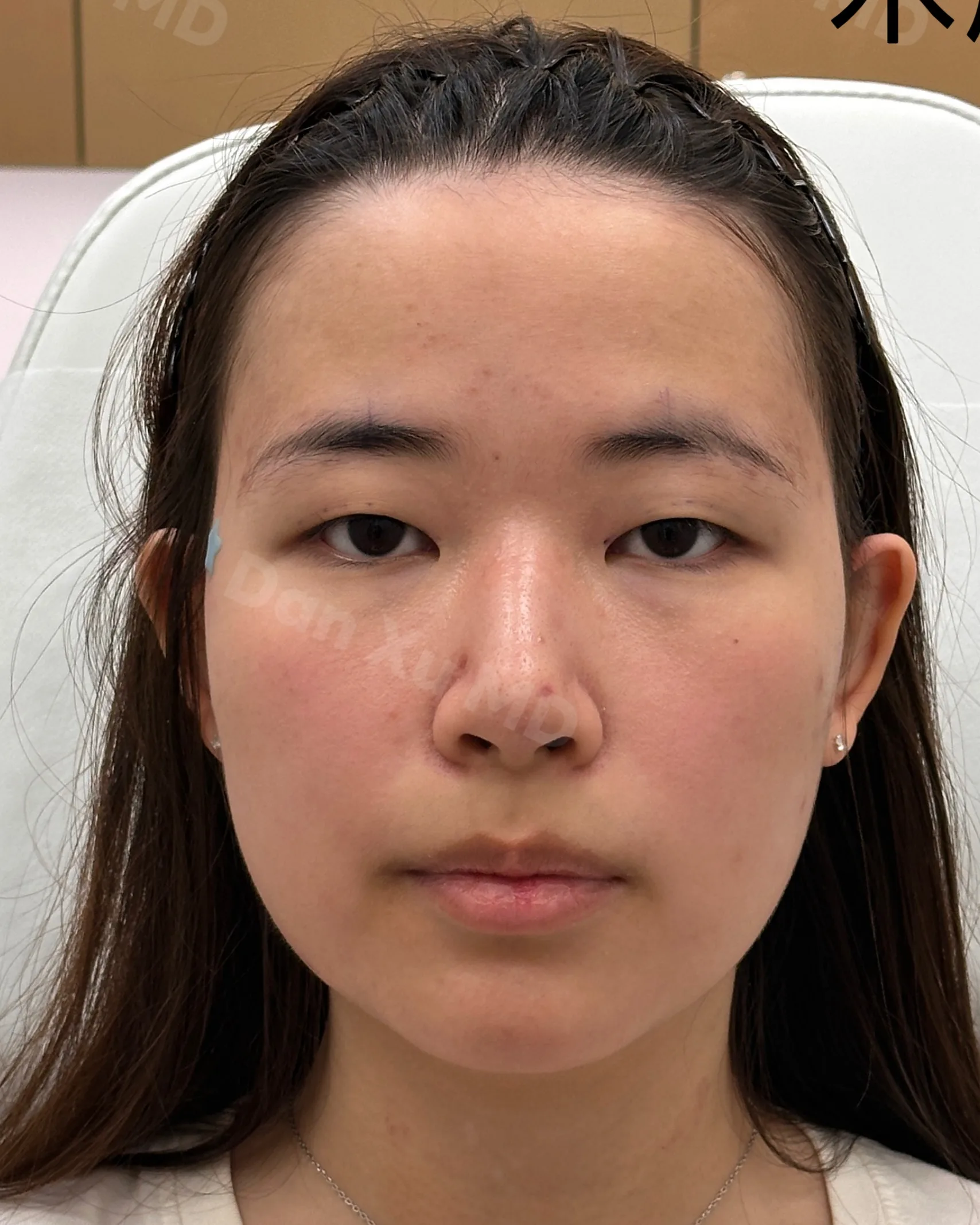
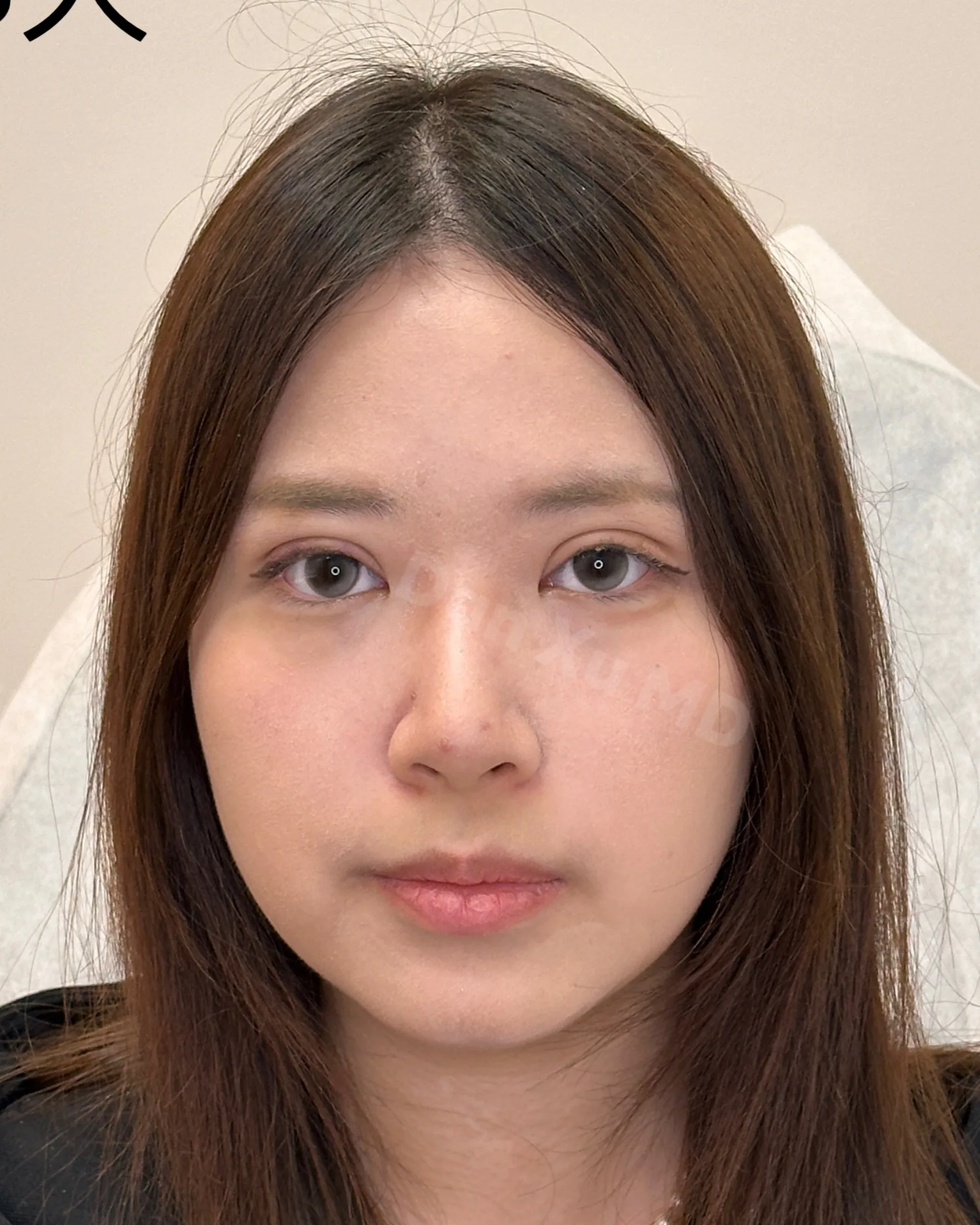
Case 6 · Brow Ptosis / Heavy Brow — Documented Results
- Patient profile
- Asian Female · Fitzpatrick IV
- Key concerns
- Brow Ptosis / Heavy Brows (Comprehensive Multimodal Combination Protocol)
- Treatment plan
- Suture double eyelid surgery (multiple procedures within 3 months)
- treatment outcomes
- Marked improvement in brow ptosis / heavy brow · Natural overall result
- Post-treatment darkening
- No PIH
- maintenance
- Routine sun protection + monthly home skincare + quarterly clinical assessment
Case 06: Brow Ptosis / Heavy Brow — Before & After · Asian female · Fitzpatrick IV · Multimodal combination protocol led by our physician, at Luowei Medical Aesthetics Clinic, Nanjing
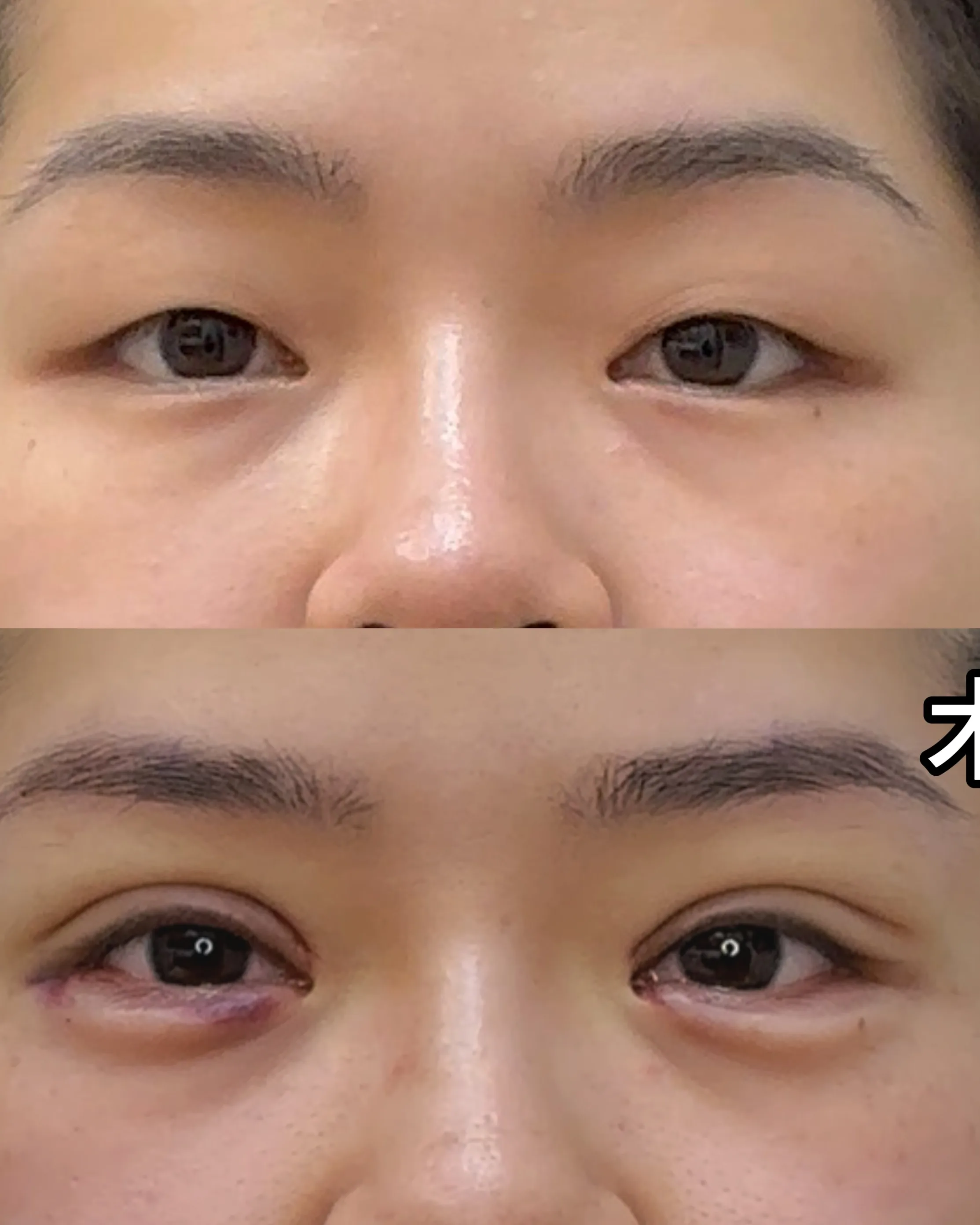
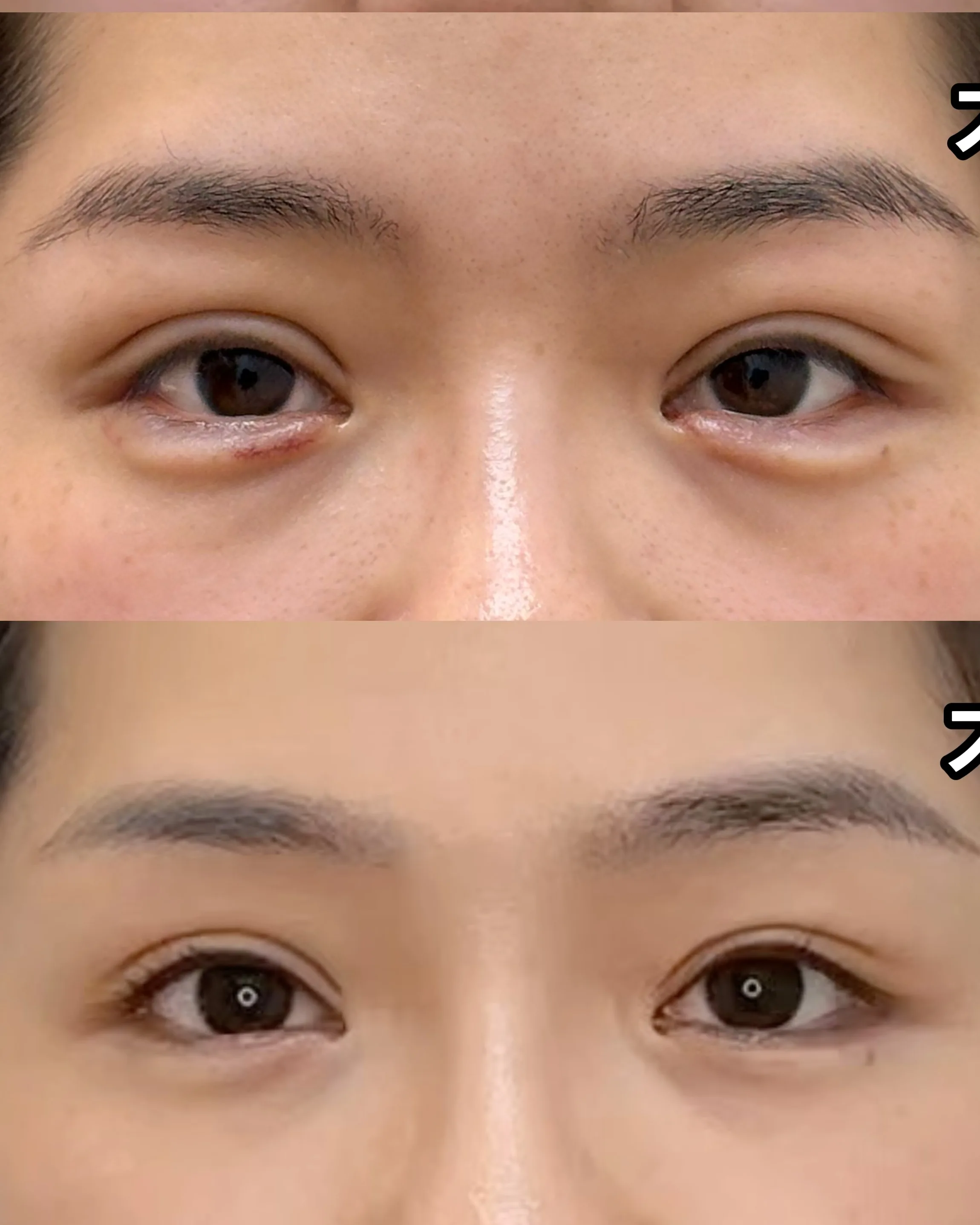
Case 8 · Documented Results: Brow Ptosis / Heavy Brow
- Patient profile
- Asian Female · Fitzpatrick IV
- Key concerns
- Brow Ptosis / Heavy Brows (Comprehensive Multimodal Combination Protocol)
- Treatment plan
- PDO Thread lift + Botox® + hyaluronic acid collagen stimulator HArmonyCa™ + collagen support, and 2 additional modalities — 6 treatments total (multiple sessions over 3 months)
- treatment outcomes
- Marked improvement in brow ptosis / heavy brow · Natural overall result
- Post-treatment darkening
- No PIH
- maintenance
- Routine sun protection + monthly home skincare + quarterly clinical assessment
Case 08: Brow Ptosis / Heavy Brow — Before & After · Asian Female · Fitzpatrick IV · Multimodal combination treatment led by our physician, at Luowei Medical Aesthetics Clinic, Nanjing
What Is Brow Ptosis / Heavy Brow? Why Is It Different from Simple Upper Eyelid Laxity?
Brow ptosis refers to a descent of the brow position relative to its youthful height, compressing the upper eyelid and making the eyes appear tired or stern. A heavy brow, on the other hand, refers to a condition caused by Orbital bone structure + brow fat pad (ROOF) + skin thickness Together, these factors lower the brow position and create a heavy, hooded appearance. Both are frequently misdiagnosed as upper eyelid ptosis, yet the treatment rationale is entirely different — a misdiagnosis can result in a double-eyelid surgery that still leaves the eyes looking heavy and unrefreshed.
Why Can’t we Simply Proceed with Double Eyelid Surgery?
When the true issue lies at the brow rather than the eyelid, a double-eyelid procedure merely folds and conceals the excess skin,3-6 months later, the brow descends again and compresses the upper eyelid, Patients feel the surgery was a wasted effort.
Why Is This More Prevalent Among Asian Women?
Asian orbital bones tend to be flatter, the ROOF is typically thicker, and there is greater upper eyelid skin volume — factors compounded after age 35 by SMAS descent and progressive collagen loss,Average brow descent of 2–4 mm.
Why is non-surgical brow lifting a viable option?
Brow position is determined by Brow elevators (frontalis) vs. brow depressors (corrugator + procerus + orbicularis)is determined by the tension balance between these muscle groups. Weakening the brow depressors with Botox® allows the frontalis to “win back” 2–3 mm of brow height — no surgery required.
Why Is a Muscle and Skeletal Assessment Essential Before Treatment?
“a low brow may stem from overactive depressor muscles, skin laxity, skeletal bone structure, or a thick fat pad — Four distinct causes — four entirely different treatment approaches. Always assess before activating a device or proceeding with injection — this is how we avoid treating in the wrong direction.
Clinical note:Many patients arrive having been told elsewhere, “You have upper eyelid ptosis — you need double eyelid surgery.” After our physician’s assessment, the real issue turns out to be a low brow position combined with a heavy brow fat pad.Try Botox® brow lifting first to assess results, then decide whether surgical intervention is warranted— This is the most reliable approach for Asian faces.
The Five Primary Causes of Brow Ptosis and Heavy Brows
A single isolated cause is rare in clinical practice — most cases involve multiple overlapping factors. Accurately identifying the primary driver determines the entire treatment direction.
1. Overactive brow depressors (dynamic type)
Chronic tension in the corrugator supercilii, procerus, and lateral orbicularis oculi muscles continuously pulls the brows downward. This pattern is commonly seen in adults in their 30s and 40s who spend long hours on screens, have expressive faces, or habitually frown.
2. Upper eyelid / brow-forehead skin laxity (laxity type)
40 After this age, dermal collagen decreases at approximately 1% per year, and the SMAS fascial layer gradually descends, pulling the brow position downward. This process accelerates noticeably around the time of menopause in Asian women.
3. Orbital bone structure + thick ROOF fat pad (structural type)
Approximately 20% of Asian women are born with fuller brow bones and a thicker retro-orbicularis oculi fat pad (ROOF), giving the brows a heavy or stern appearance even in youth. These patients show no signs of laxity or aging, yet they require a distinct treatment strategy.
4. Compensatory frontalis fatigue
Patients with long-standing upper eyelid laxity often unconsciously recruit the frontalis muscle to lift the brows and improve their field of vision. Over time, the frontalis fatigues and can no longer compensate effectively, resulting in an asymmetric, drooping appearance. These patients typically present with significantly deepened forehead lines.
5. Trauma / nerve injury / prior surgery
Injury to the temporal branch of the facial nerve — from trauma, post-Bell’s palsy sequelae, or prior brow lift surgery — misplaced Botox® injection points, or laser energy delivered too deeply into facial nerve branches can all cause unilateral brow ptosis. An underlying medical cause must be ruled out before proceeding.
4 Periorbital conditions commonly confused with brow ptosis — key differential diagnosis points
Misclassification leads to the wrong surgery or the wrong injection. The table below summarizes the 4 most common differential diagnoses encountered in our physician’s clinical practice.
True Ptosis (Upper Eyelid Ptosis)
Levator Dysfunction · Levator muscle dysfunction
| Key clinical signs | Pupil partially obscured by the upper eyelid margin; MRD1 < 2mm |
|---|---|
| Brow position | Normal or compensatory elevation |
| Forehead lines | Significantly deepened (compensatory) |
| test | Immobilizing the forehead results in a noticeably smaller palpebral aperture |
| first-line treatment | Oculoplastic surgery (levator muscle shortening) |
Brow Ptosis / Heavy Brow
Brow Ptosis · Topic of this article
| Key clinical signs | Low brow position making the upper eyelid appear heavy and drooping |
|---|---|
| Brow position | below the supraorbital rim |
| Forehead lines | normal or mild |
| test | Manually lifting the brow immediately “opens” the eye |
| first-line treatment | Botox Brow Lift / Sofwave™ / Silhouette |
Upper eyelid skin laxity (dermatochalasis)
Excess Upper Eyelid Skin
| Key clinical signs | Excess upper eyelid skin covering the lid margin with loss of the lid crease |
|---|---|
| Brow position | Normal |
| Forehead lines | Mild |
| test | Residual excess upper eyelid skin persisting after brow lifting |
| first-line treatment | Upper blepharoplasty / minimally invasive double-eyelid procedure |
Frontalis fatigue / compensatory failure
Frontalis Fatigue
| Key clinical signs | Low brow position at rest, with effortful active brow elevation |
|---|---|
| Brow position | Bilateral asymmetric ptosis |
| Forehead lines | deeply set static lines |
| test | Noticeable drooping after holding a brow lift for 30 seconds |
| first-line treatment | Address the root cause first (laxity / ptosis) + use Botox® with caution |
⚠️ Warning:Clinically, 20–30% of clients who come in requesting double eyelid surgery are found upon assessment to actually have brow ptosis as the primary driver. If double eyelid surgery is performed first without addressing the brow, the upper eyelid will be weighed down again within 3–6 months. Inaccurate diagnosis leads to surgical failure and repeated revisions — this is the single biggest frustration among Asian periocular patients.
Why must brow treatment for Asian faces follow an Asian orbital bone specialist protocol?
A blind spot in mainstream North American clinics
Most medical aesthetic clinics in North America base their Botox® brow-lift injection mapping and energy protocols on Caucasian deep-set orbital bone + prominent brow ridge anatomical framework. Applying it directly to Asian patients with flatter orbital bones and a thicker ROOF fat pad can result in:
- ✗ Over-elevation of the brow resulting in a “Spock brow”— Lateral brow peak elevated too high, creating a stern expression
- ✗ Worsening upper eyelid droop— Incorrectly reducing frontalis dosage leads to compensatory collapse.
- ✗ Heavy brow not identified— Treating structural heaviness as skin laxity and applying energy-based tightening will not be effective.
Our physician’s specialist refinements for Asian faces
| parameters | North American standard | Asian-adjusted |
|---|---|---|
| number of brow lift injection points | 2-4 points | 4-6 Precisely symmetric micro-dosing |
| Lateral orbicularis injection depth | deeper | Very superficial (1–2 mm) |
| frontalis dosage | Standard | Reduce dosage to preserve brow-lifting strength |
| Sofwave transducer depth | 1.5mm Standard | 1.5mm + Superficial injection 0.5 mm below the brow |
| assessment required | brow elevation test | Brow lift test + ROOF palpation + skeletal analysis |
Key differentiating factors:Our physician has dedicated 8 years to Asian facial aesthetics at our Nanjing clinic, where over 90% of clients have Asian faces.
6 Treatment Options for Brow Ptosis & Heavy Brows — Matched to the Underlying Cause
There is no one-size-fits-all brow lifting method. We combine the devices and treatments below based on the underlying cause and patient type.
Botox Brow Lift with Neuromodulator
Through precisely weakening Lateral orbicularis oculi + corrugator supercilii + procerus, Allowing the frontalis to “win” back 2–3 mm of brow elevation.
Sofwave Ultherapy®
1.5mm Focused ultrasound energy targets the SMAS layer directly, stimulating new collagen formation,Particularly effective for laxity-type brow and forehead descent. Minimal downtime; can be combined with Botox® within the same treatment cycle.
Thermage FLX Thermage® FLX
Radiofrequency deep heating stimulates collagen remodeling,Forehead lines + brow ptosis + upper eyelid laxity — a triad that must be addressed together improvement. Best suited for clients over 40 with combined aging-related changes.
Silhouette InstaLift brow-lifting threads
PLLA Absorbable barbed threads provide an immediate physical lift to the brow peak, suitable for Structural heavy brow + desire for immediate results. Results maintained for 12–18 months.
Glabellar / temporal filler for micro-balancing
Micro-dose hyaluronic acid filler to the temporal hollow or sub-brow bone restores structural support and elevates brow appearance. Often the finishing touch in a comprehensive treatment plan.
Skin booster / Sculptra® in the brow and forehead area (adjunct)
Dermal collagen stimulation improves the long-term texture and volume of the brow and forehead area.Cannot be used as a standalone primary treatment, but as a long-term maintenance strategy, the results are significant.
Our physician’s 6-Step Standard Protocol for Brow Ptosis
Consultation + brow lift test + skeletal assessment
30 minute free consultation, including static and dynamic comparative photography, manual brow elevation test, ROOF fat pad palpation, and MRD1 measurement.No device activation or injection without classification.
Rule out true upper eyelid ptosis
If MRD1 < 2mm, Refer to oculoplastic surgery; if brow-dominant, proceed.This step prevents the mistake of treating a surgical indication with Botox®..
Conservative test dose at first session (Botox® brow lift)
Lateral orbicularis + micro-dose at the corrugator origin.Asian faces particularly benefit from a conservative starting approach., The first session is not aimed at maximum effect; a 7–14-day follow-up assessment determines whether any supplemental dosing is needed.
14 Day follow-up + fine-tuning
Assess the degree of lift, symmetry, and whether a Spock brow has developed. If fine-tuning is needed, add 1–2 units. This step is critical to achieving a natural appearance in Asian faces.
Energy-based tightening (optional, 4–6 weeks later)
For laxity-type patients, one session of Sofwave™ or Thermage® FLX is added. For structural heavy-brow patients, Silhouette thread lifting is incorporated. For combined aging-type patients, a multi-modality combination approach is used.
Maintenance period (long-term)
Botox Every 4–5 months for Botox®; every 12–18 months for Sofwave™ or Thermage® FLX; every 12–18 months for Silhouette InstaLift. With long-term maintenance, muscle memory gradually diminishes and Botox® intervals can often be extended.
Treatment Timeline — How Soon Will You See Results?
| Plan | Onset of effect | Peak | maintenance | Recovery period |
|---|---|---|---|---|
| Botox Brow Lift | 3-5 days | 14 days | 4-5 months | None |
| Sofwave Ultherapy® | 4-6 weeks | 3-4 months | 12-18 months | None |
| Thermage FLX | 4-8 weeks | 3-6 months | 12-18 months | None |
| Silhouette brow-lifting threads | Immediate | 1-2 weeks | 12-18 months | 2-3 days of tightness |
Clinical note:Rushing the process is the single biggest mistake in Asian brow lifting. Starting with a conservative dose and fine-tuning at follow-up consistently produces more natural-looking results over time. Among our Nanjing clients who have maintained a consistent treatment schedule for 2–3 years, more than 85% report high satisfaction with their natural lift.
Are You a Candidate for Non-Surgical Brow Lifting? A 2-Minute Self-Assessment
✅ Appropriate starting point for assessment
- ✓When the brow is gently lifted by hand, the eyes immediately appear more open and refreshed
- ✓Brow position below the supraorbital rim / appearing stern or fatigued
- ✓30-55 year-old Asian face
- ✓Prefer to avoid surgery or not ready to consider it at this time
- ✓Comfortable with a 4–5 month maintenance schedule
- ✓Previous double-eyelid surgery yet eyes still feel heavy
❌ requires deferral or addressing other issues first
- ✗Currently pregnant or breastfeeding
- ✗MRD1 < 2mm True ptosis (requires surgical intervention)
- ✗History of myasthenia gravis or other neuromuscular disorders
- ✗Prior severe allergic reaction to Botox®
- ✗Expecting a single session to deliver permanent brow lifting (unrealistic expectation)
- ✗Facial nerve injury / unstabilized facial palsy
Luowei Physician-Led Brow Lifting Protocol vs. Typical MedSpa
- ✗Skipping the brow lift test and injecting directly according to a template
- ✗True upper eyelid ptosis cannot be ruled out — Botox® in this context may worsen the condition.
- ✗Applying North American Caucasian injection point and dosage templates
- ✗Pursuing maximum dosage at the first visit risks a Spock brow deformity
- ✗Injections are often performed by an RN or aesthetician
- ✗When complications arise, being told to “wait 4 months for it to metabolize”
- ✗No 14-day follow-up fine-tuning protocol
- ✓Mandatory brow elevation test + MRD1 measurement + bone structure assessment
- ✓Rule out true upper eyelid ptosis before finalizing the treatment plan
- ✓Conservative start at the first session + 14-day follow-up for fine-tuning
- ✓Our physician — personally consults and performs all injections
- ✓Spock brow / active correction mechanism for worsened ptosis
- ✓Multi-device combination therapy (Botox® + Sofwave™ + thread lifting)
Why is Luowei Medical Aesthetics Clinic’s information on brow ptosis trustworthy?
Experience
Expertise Specialty
Authoritativeness authoritative
Trustworthiness Trustworthy
All cases on this page are authorized via a signed Media Release Form · Clinical data available on request
Pricing for Brow Ptosis & Heavy Brow Treatments
Pricing for brow-lifting treatments varies widely between clinics — but the real cost driver is not how many units of Botox® are used or how many passes of Sofwave™ are delivered. What matters is who assesses you, who designs your plan, and how deeply a physician’s clinical judgment is involved. Brow ptosis has complex, overlapping causes — dynamic muscle activity, skin laxity, bone structure, and neural compensation — and a misdiagnosis costs far more than a single accurate consultation. Complex cases — asymmetry, revision patients, prior surgical failures, or concurrent true ptosis risk — require our physician’s direct, in-depth involvement, and the pricing structure reflects that level of medical expertise. allocation of clinical resources. For stable maintenance clients with relatively straightforward anatomy who require only a subtle lateral brow lift, our trained medical team can safely deliver treatment under the physician’s protocol — making this option more accessible. All injectable treatments are performed by the physician personally; this is non-negotiable. Energy-based treatments are supervised according to their complexity. The price difference between laser and injectable services fundamentally reflects the difference in clinical experience between physician-performed and technician-performed care. Which approach is right for you is determined by the brow lift test and skeletal assessment — not by price. Your personalized plan will beThis will be discussed together during your consultation.
- Payment is made at the clinic, after the consultation and before treatment begins
- Nothing is paid in advance, and no deposit is required to hold an appointment
- Cosmetic treatment is a self-pay item and is not covered by public medical insurance in China
- All new patients receive a complimentary 30-minute Free Consultation & Assessment
Risks & Contraindications — Full Transparency
What are the main risks?
1. Spock brow(lateral brow peak elevated too high): return at 14 days for a balancing touch-up; 2. worsening upper eyelid ptosis(dosage miscalculation or product migration): allow 2–4 weeks for natural metabolism; 3. Mild bruising at the injection site (common; resolves in 3–7 days); 4. Transient headache or tightness (24–48 hours); 5. Allergic reaction (rare); 6. Asymmetry (<5% likelihood, correctable with a touch-up); 7. Inadequate maintenance period leads to unmet expectations.
Who Should Absolutely Not Receive This Treatment?
Pregnancy, breastfeeding, myasthenia gravis, Lambert-Eaton syndrome, unstabilized facial nerve injury, a known serious allergy to Botox®, active infection at the injection site, unexcluded true ptosis, or unrealistic expectations (believing one session delivers permanent results) — in any of these situations, our physician will recommend deferring treatment or referring to the appropriate specialist.
How is the risk of a Spock brow minimized during treatment?
Five key principles: (1) Start conservatively at the first session — never aim for maximum effect in one visit. (2) Inject the lateral orbicularis at a superficial depth (1–2 mm). (3) A mandatory 14-day follow-up is required to assess and touch up. (4) For the first 24 hours, avoid massaging the area, sleeping face-down, or intense exercise. (5) If a Spock brow develops, return immediately — a small touch-up to the frontalis can restore balance.
What does the informed consent form include?
Before any first treatment, every patient signs an informed consent form covering: how neuromodulators work, possible adverse reactions and their likelihood, alternative options, criteria for stopping treatment, the 14-day follow-up schedule, and a media release (optional). All of this is explained by our physician personally — not delegated to administrative staff.
Where the medical claims on this page come from
Everything above about Brow Ptosis / Heavy Brows rests on published evidence rather than on our own word. The sources below are the ones behind those statements: peer-reviewed papers indexed in PubMed, and guidance written for patients by dermatology academies and national health services. Read them before you decide — and bring any of them to your consultation.
- Peer-reviewedBotulinum toxin type A for facial wrinkles
- Peer-reviewedBotulinum Toxin Treatment for Mild to Moderate Platysma Bands: A Systematic Review of Efficacy, Safety, and Injection Technique
- Patient guidanceWrinkles
- Patient guidanceDermal fillers: Overview
- Patient guidanceBotulinum toxin: Overview
What these references can and cannot tell you. They describe what is known about the treatment itself — how well it tends to work, how long results last, and what can go wrong. They are not an assessment of this clinic, and no published study can tell you whether it suits your skin type, anatomy, or medical history. That judgement comes from the physician who examines you in person, and it may well be “not this one”.