Chubby Cheeks / Facial Fullness
Belkyra Facial Fat Dissolving · CoolSculpting · Ultherap…
Our physician’s Real Before & After Cases — Facial Fullness / Chubby Cheek Treatment
The following four cases were personally assessed and planned by our physician at our Nanjing clinic and are shared with signed Media Release Form authorization. The causes of facial fullness are complex — involving fat, masseter, bone structure, and puffiness — and individual responses vary. Actual outcomes are determined through in-person consultation and assessment.
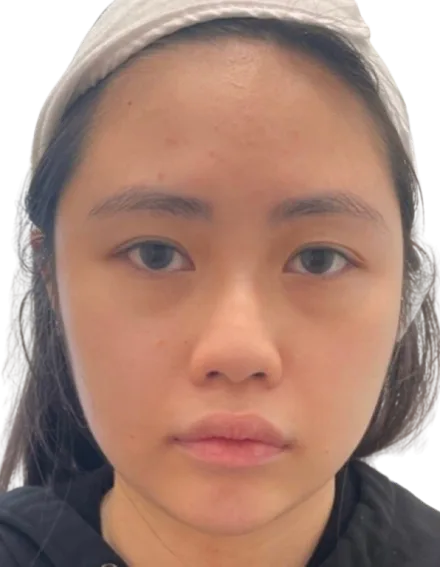
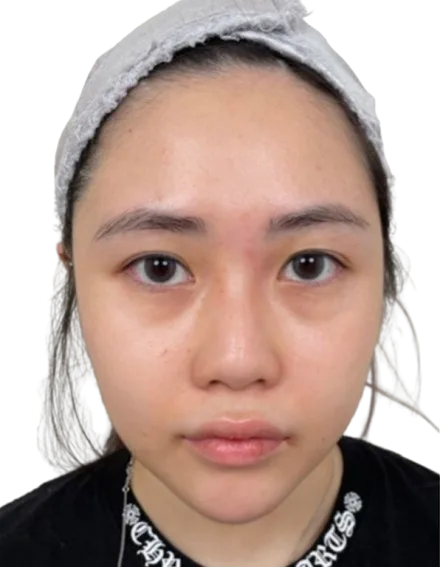
Case 1 · Chubby Cheeks / Facial Fullness — Real Patient Record
- Client profile
- Asian Female · Fitzpatrick IV
- Primary concern
- Chubby Cheeks / Facial Fullness (Comprehensive Multimodal Combination Approach)
- Treatment plan
- Botox® + Dysport® + Xeomin® for facial slimming / masseter reduction — 9 treatment types, multiple sessions within 3 months
- Treatment outcomes
- Significant reduction in facial fullness · Natural-looking overall result
- Post-inflammatory hyperpigmentation (PIH)
- No PIH
- Maintenance
- Botox Masseter + buccal fat pad management
Case 01: Chubby Cheeks / Facial Fullness — Before Comparison · Asian Female · Fitzpatrick IV · Multimodal combination treatment led by our physician, at Luowei Medical Aesthetics Clinic, Nanjing
What are chubby cheeks / facial fullness? Why is this different from simply having a “fat face”?
“Chubby cheeks” is a colloquial term. A proper medical assessment must break the concern down into four independent contributing factors:Buccal fat pad (Bichat fat pad) location and volume · Masseter thickness · Mandibular bone structure · Facial tissue hydration level and degree of laxity. Many Asian women who come to our Nanjing clinic requesting facial slimming or chubby cheek reduction are surprised to learn — after assessment by our physician — that nearly half of them do not actually have excess fat. Instead, their fullness is driven by one or more of the other three factors, which are commonly mistaken for fat.
Why can’t we simply opt for facial liposuction?
The branches of the facial nerve, parotid duct, and facial vessels are densely distributed around the buccal fat pad. Blind aspiration or excessive fat dissolution can result in Facial hollowing, nerve weakness, irreversible contour collapse. Asian faces have inherently limited facial fat volume, leaving an extremely low margin for error.
Why Do So Many Asian Women Self-Diagnose as Having “Chubby Cheeks”?
East Asian aesthetics value the V-line and facial definition — yet the Asian facial structure is naturally rounder, with a wider zygomatic arch and fuller jawline.Roundness determined by bone structure is not a fat problem, but is frequently and incorrectly attributed to being “overweight.”
Why is the treatment approach for chubby cheeks completely different depending on age?
20–30 Younger patients more commonly present with true buccal fat pad fullness; from the 30s to 40s, “sagging chubby cheeks” — a combination of fat and laxity — begin to emerge; beyond 40, the predominant pattern is typically downward tissue migration and accumulation — The same appearance, entirely different underlying causes.
Why Is the Four-Factor Assessment Always Done First?
Fat → Belkyra® / CoolSculpting®; Masseter → Botox®; Laxity → Ultherapy® / Thermage® FLX; Puffiness → Lifestyle modification.The four treatment types are not interchangeable, Getting one step wrong can make things worse.
Clinical notes:Many clients have been told elsewhere that “a few fat-dissolving injections will slim the face” — only to experience hollowing, asymmetry, temporary nerve weakness, or rebound fullness after weight regain. These complications arise from skipping the four-factor differential assessment. Our physician’s protocol The first step is always physical palpation and dynamic expression assessment, rather than jumping straight to selecting a device.
Five causes of facial fullness — it is not simply about being “overweight”
BMI and facial fullness do not follow a linear relationship. Clinically, many clients have a lean body but a rounder face — the root cause is not simply “being overweight.”
1. Congenitally prominent buccal fat pad
Bichat The buccal fat pad sits just anterior to the masseter, and its volume is genetically determined. Approximately 20% of Asian women have a naturally fuller buccal fat pad — unrelated to body weight and present since adolescence.
2. Masseter Hypertrophy
Night grinding, teeth clenching, and habitual chewing of hard foods all cause the masseter to thicken over time. Clinically, a masseter thickness greater than 13 mm measured during clenching on palpation confirms hypertrophy — a condition frequently misidentified as “jawline fat.”
3. Mid-to-lower facial laxity / SMAS descent
30 With age, SMAS-layer laxity and weakening of the retaining ligaments allow the buccal fat pad to descend and accumulate along the jawline, resulting in “sagging chubby cheeks” and early jowl formation.
4. Chronic puffiness / impaired lymphatic drainage
High-sodium diet, poor sleep, hormonal fluctuations, and alcohol intake can cause interstitial fluid retention. A tell-tale sign is noticeable puffiness in the morning that improves by afternoon; this can be confirmed with a pitting edema test.
5. Skeletal factors (wide zygomatic arch / prominent jaw angle flare)
In some clients, facial fullness originates from Wide zygomatic arch + prominent jaw angle, This is a bone structure issue, not a soft-tissue one. Fat dissolution and skin tightening cannot alter skeletal shape — what is needed is a holistic aesthetic plan, not a “volume removal” approach.
4 Types of facial fullness commonly confused with chubby cheeks — key differential diagnosis points
Incorrect classification leads to the wrong treatment — and potentially irreversible complications. The table below outlines the four most common differentials in our physician’s clinical practice.
True buccal fat pad fullness
True Buccal Fat Prominence
| Distribution | Lower cheek fullness (anterior to the masseter) |
|---|---|
| Palpation | Soft and mobile on palpation, no firmness |
| Age | Present since adolescence |
| Weight-related | Persists despite stable body weight |
| Preferred treatment | Belkyra Micro-dose precision fat dissolving |
Masseter hypertrophy
Masseter Hypertrophy
| Distribution | Angular jaw + jawline fullness |
|---|---|
| Palpation | Hardens and bulges when biting down |
| Age | Often associated with a history of bruxism; can occur at any age |
| Weight-related | Unrelated to body weight |
| Preferred treatment | Botulinum toxin masseter injection |
Laxity-related sagging fullness
SMAS Laxity / Jowl
| Distribution | Lateral jawline definition + nasolabial fold deepening |
|---|---|
| Palpation | Significant improvement in the resting upright position |
| Age | Most commonly seen in patients 35 and older |
| Weight-related | Worsens with weight loss |
| Preferred treatment | Ultherapy® / Thermage® FLX SMAS tightening |
Puffiness-related fullness
Facial Edema
| Distribution | Uniform full-face puffiness with noticeable eyelid swelling |
|---|---|
| Palpation | Positive pitting edema test |
| Age | Any age, often associated with lifestyle |
| Weight-related | More pronounced in the morning, improving by midday — fluctuating throughout the day |
| Preferred treatment | Lifestyle modification + lymphatic drainage — no fat-dissolving treatment |
⚠️ Warning:Clinically, 40% of clients who come in requesting treatment for “chubby cheeks” are reclassified after physical assessment — the primary cause is actually masseter hypertrophy, skin laxity, or fluid retention.Misidentify the primary cause → choose the wrong treatment → waste money or make the face look worse— This is the most common frustration among facial contouring clients in Nanjing.
Why Do Chubby Cheeks in Asian Faces Require an Asian-Specialist Approach?
Blind spots in mainstream North American treatment approaches
Most facial contouring protocols used in mainstream North American clinics are based on Caucasian anatomy and aesthetic standards. Applying them directly to Asian faces leads to three fundamental problems:
- ✗ Excessive fat-dissolving dosage— Asian faces carry less facial fat — applying Caucasian dosages directly causes hollowing
- ✗ Bone structure assessment overlooked— North American protocols assume a narrower bone structure by default — the wider zygomatic arch and more prominent mandibular angle common in Asian patients are frequently overlooked.
- ✗ Inadequate masseter identification— Masseter hypertrophy is significantly more prevalent in Asian women than in Caucasian patients — and is frequently under-diagnosed in North American practice.
Our physician’s Asian facial anatomy-specific adjustments
| Parameters | North American standard | Asian-specific adjustments |
|---|---|---|
| Belkyra Single-session dosage | 1.0–2.0ml | 0.4–0.8ml |
| Injection point density | More densely placed | Selected Key Points |
| Interval | 4 weeks | 4–6 weeks |
| Four-Factor Assessment | Optional | Required |
| Skeletal assessment | Less is more | Required |
Key differentiating factors:Our physician has dedicated 8 years to Asian facial aesthetics at our Nanjing clinic, with over 90% of clients presenting with Asian facial features.
6 Treatment Options for Facial Fullness / Chubby Cheeks — Matched to the Primary Cause
There is no single “face-slimming miracle.” We select devices and therapies based on physical examination, differential assessment, and the combination of underlying factors driving your concern.
Belkyra(deoxycholic acid) for precise facial fat dissolution
NMPA-registered injectable fat-dissolving treatment that uses deoxycholic acid to disrupt fat cell membranes. Our physician’s protocol uses Micro-dose precision protocol for Asian faces— Reducing dosage per session, selecting injection sites with greater precision, and extending treatment intervals significantly lower the risk of hollowing and asymmetry.
CoolSculpting (dedicated facial applicator)
using controlled cooling at -11°C to induce fat cell apoptosis, suitable for clients with thicker facial fat deposits who prefer No injections, minimal downtime clients. Multiple sessions are required, with results that improve gradually and naturally.
Learn About CoolSculpting →
Ultherapy® / Thermage® FLX
For “sagging chubby cheeks” — a combination of fat excess and tissue laxity — fat dissolution alone will worsen the drooping. SMAS-layer tightening must be addressed first before any localized fat reduction is considered.
BodyFX / Forma Radiofrequency tightening
A non-invasive bipolar radiofrequency treatment targeting the dermis and superficial fat layer. When added 4–6 weeks after Belkyra®, it can help accelerate metabolic clearance, smooth the transition zone, and reduce the risk of uneven contours.
Lymphatic drainage + lifestyle intervention
For edema-dominant clients, our physician We do not promote or upsell any fat-dissolving device., Instead, we recommend a low-sodium diet, sleep optimization, and regular lymphatic drainage, with a reassessment at 4 weeks to determine whether further treatment is needed.
Our physician’s 6-Step Standard Protocol for Facial Fullness
Consultation + Four-Factor Assessment
30 minute Free Consultation, including palpation, bite-position assessment, chin-up test, pitting-edema test, and VISIA 3D imaging analysis.No treatment without proper classification.
Bone structure and aesthetic assessment
We measure zygomatic arch width, mandibular angle, and the facial thirds-and-fifths proportions. This helps determine whether the concern is a soft-tissue issue — or whether a holistic aesthetic plan is needed, rather than simply removing volume.
Tiered Treatment Planning + Informed Consent
A single or combination treatment plan is developed based on the dominant factor, with a thorough explanation of expected outcomes, risks, and maintenance requirements.We decline to proceed with treatment when client expectations are inconsistent with realistic outcomes.is the norm.
Active Treatment Phase (1–4 sessions, every 4–6 weeks)
Belkyra / Botox® / Ultherapy® are administered according to your personalized plan. After each session, cold compresses and anti-inflammatory aftercare are applied to minimize swelling and ensure accurate assessment at your next visit.
Assessment Phase (8–12 weeks after completing the active treatment phase)
VISIA Quantitative comparison with dual-angle assessment — chin-up and straight-ahead — to determine whether supplementary treatment is needed or whether the client is ready to enter the maintenance phase.
Maintenance period (varies by individual)
Belkyra Results are generally stable with no routine maintenance required; neuromodulator touch-ups every 6 months; Ultherapy® maintenance every 12–18 months.Weight stability is key to long-lasting results..
Treatment Timeline — How Long Until You See Results?
| Primary contributing factor | Treatment cycle | Initial results visible | Significant improvement | Maintenance interval |
|---|---|---|---|---|
| True Fat (Belkyra®) | 2–4 sessions | After the 2nd session | 6 weeks after the 3rd session | Typically no routine maintenance required |
| Masseter-type (Botox®) | 1 sessions | Weeks 4–6 | Peak results at week 12 | Fine-tuning every 6 months |
| Laxity-type (Ultherapy® / Thermage® FLX) | 1 sessions | After week 8 | Weeks 12–24 | Every 12–18 months |
| Mixed type | 2–3 Phase | After Phase 1 | 6 month complete treatment cycle | Per-component maintenance |
Clinical Note:Rushing results is the single greatest pitfall in facial contouring. Using slightly less per session and spacing treatments further apart consistently yields more natural-looking outcomes, smoother transitions, and fewer complications over time. Among our Nanjing clients who follow our staged, gradual-progression protocol, satisfaction rates exceed 95%.
Are You a Candidate for Chubby Cheek Treatment? 2-Minute Self-Assessment
✅ Ready to begin assessment
- ✓Weight stable for 6+ months yet cheeks remain full
- ✓Bilateral facial fat that has persisted since adolescence
- ✓Chronic teeth grinding / clenching with lower facial fullness
- ✓30+ Loss of jawline definition combined with mid-face descent
- ✓Accept a gradual 3–6 month process (rather than expecting immediate results in a single session)
- ✓Seeking a natural, gradual result rather than an extreme V-line
❌ Treatment should be postponed or other issues addressed first
- ✗Currently pregnant or breastfeeding
- ✗Body weight is fluctuating significantly (±5 kg/month)
- ✗Edema-dominant type with noticeable morning puffiness that improves by afternoon (lifestyle modification first)
- ✗Facial fullness primarily determined by the zygomatic arch / mandible (bone structure)
- ✗Expecting a complete V-line transformation after a single session (unrealistic expectation)
- ✗Active autoimmune disease flare / coagulation disorder
Luowei Physician-Led Chubby Cheeks Protocol vs. Standard MedSpa
- ✗Injecting after a cursory glance, without performing a four-factor differential assessment
- ✗Using Belkyra® to treat all cases of facial fullness indiscriminately
- ✗Dosage parameters derived from North American Caucasian templates
- ✗Assessing only soft tissue without evaluating bone structure
- ✗Injections frequently performed by non-physician providers
- ✗being told to “add more filler” after developing volume loss or asymmetry
- ✗No weight management or lifestyle counselling provided
- ✓Required: four-point assessment — palpation, bite test, chin-up test, and pitting-edema test
- ✓6 Treatment combination options and their respective optimal clinical applications
- ✓Required: bone structure assessment and facial proportion analysis (three horizontal zones / five vertical units)
- ✓Our physician — Personal Consultation & Injection
- ✓Expectation management + proactively declining requests that are not clinically appropriate
- ✓Puffiness-type: no fat dissolution — lifestyle modification first
Why Is Luowei Medical Aesthetics Clinic’s Approach to Chubby Cheek Treatment Trustworthy?
Experience
Expertise Specialty
Authoritativeness Authority
Trustworthiness Credible
All before-and-after cases on this page are shared with signed Media Release authorization · Clinical records available
About the Cost of Chubby Cheek / Facial Fullness Treatment
Pricing for facial contouring varies widely across clinics — but the real cost driver is not the device or product itself; it is who evaluates you, who identifies the dominant cause, and who determines dosage and injection points. Chubby cheeks involve four entirely distinct underlying mechanisms — fat, masseter, laxity, and puffiness — with an extremely low margin for error, as hollowing and asymmetry can be irreversible. Cases of this complexity involve our physician’s direct, in-depth participation, and our pricing reflects that level of physician expertise. All injectable treatments are performed by the physician personally — this is a non-negotiable standard at Luowei Medical Aesthetics Clinic. For clients who are already stable, Energy-based treatments focused on skin tightening and maintenance — such as Ultherapy® or BodyFX — can be safely performed by our trained medical team under physician protocol, making them a more accessible option. The price difference between laser and energy treatments ultimately reflects the clinical experience gap between physician-performed and technician-performed procedures. Which approach is right for you is determined by your clinical presentation, not by price — the specific plan will be discussed at your consultation alongside the four-factor assessment and skeletal evaluation.
- Payment is made at the clinic, after the consultation and before treatment begins
- Nothing is paid in advance, and no deposit is required to hold an appointment
- Cosmetic treatment is a self-pay item and is not covered by public medical insurance in China
- All first-time clients receive a complimentary 30-minute Free Consultation & Assessment
Risks & Contraindications — What You Need to Know
What are the main risks?
1. Swelling(Belkyra 5–14 days post-treatment, common but manageable); 2. Bruising(injection-related, resolving within 1–2 weeks); 3. Asymmetry(can be minimized through precise technique and staged treatments); 4. Volume loss / hollowing(This is a particular concern for Asian faces. Our physician’s protocol mitigates this risk through low-dose, precision injection techniques); 5. Transient nerve involvement(rare, mostly temporary); 6. Reduced chewing strength(masseter over-relaxation with neuromodulator, rare); 7. Results fall short of expectations(Clients in whom bone structure is the primary contributing factor require particularly careful expectation management.)
Who is absolutely not a candidate?
Pregnancy, breastfeeding, active autoimmune flare, coagulation disorder, active facial infection, known allergy to deoxycholic acid or neuromodulators, incomplete recovery from facial surgery within the past 6 months, unassessed severe keloid tendency, significant ongoing weight fluctuation, or unrealistic expectations (believing a single session can achieve a V-line result) — in any of these situations, our physician will recommend postponing treatment or addressing the underlying issue first.
How Is the Risk of Volume Loss and Asymmetry Minimized During Treatment?
Five core principles: (1) Always perform the four-factor differential to rule out bone structure or puffiness as the primary driver; (2) start at the lower end of the dosage range and reassess before incrementally increasing; (3) allow a minimum of 4 weeks between sessions to ensure swelling has fully resolved before re-evaluation; (4) avoid significant weight loss immediately before or after treatment; (5) apply cold compresses and follow anti-inflammatory aftercare post-procedure — book a follow-up immediately if any persistent discomfort occurs.
What Does the Informed Consent Form Include?
Every client signs an informed consent form before their first treatment. It covers: how the treatment works, possible adverse reactions and their likelihood, alternative options, criteria for stopping treatment, follow-up scheduling, and an optional Media Release. Our physician personally walks through every item with you — this is never delegated to administrative staff.
Additional Comparison & Reference Data
| Distribution | Mid-lower cheek bulge |
|---|---|
| Palpation | Soft and mobile |
| Dynamic | Visibly pushes upward when smiling |
| Weight-related | Unrelated |
| First-line treatment | Belkyra Focal facial injections / surgical buccal fat pad removal |
| Distribution | Lateral jaw angle |
|---|---|
| Palpation | A firm bulge that becomes visible when clenching the jaw |
| Dynamic | Prominent when clenching |
| Weight-related | Unrelated |
| First-line treatment | Botox Masseter injection (jaw slimming) |
Where the medical claims on this page come from
Everything above about Chubby Cheeks / Facial Fullness rests on published evidence rather than on our own word. The sources below are the ones behind those statements: peer-reviewed papers indexed in PubMed, and guidance written for patients by dermatology academies and national health services. Read them before you decide — and bring any of them to your consultation.
- Peer-reviewedBotulinum toxin type A for facial wrinkles
- Peer-reviewedBotulinum Toxin Treatment for Mild to Moderate Platysma Bands: A Systematic Review of Efficacy, Safety, and Injection Technique
- Patient guidanceWrinkles
- Patient guidanceDermal fillers: Overview
- Patient guidanceBotulinum toxin: Overview
What these references can and cannot tell you. They describe what is known about the treatment itself — how well it tends to work, how long results last, and what can go wrong. They are not an assessment of this clinic, and no published study can tell you whether it suits your skin type, anatomy, or medical history. That judgement comes from the physician who examines you in person, and it may well be “not this one”.