Nasolabial folds
Nasolabial folds (smile lines) are the grooves that run from the sides of the nose down to the corners of the mouth.
Our physician’s Real Nasolabial Fold Treatment Cases
The following are authentic clinical records from our physician’s nasolabial fold treatments performed at Luowei Medical Aesthetics Clinic (Nanjing). All clients have signed a written Media Release Form consenting to public use. All photos are unretouched clinical documentation. Individual results vary based on mid-face structure, skin thickness, and skeletal support.
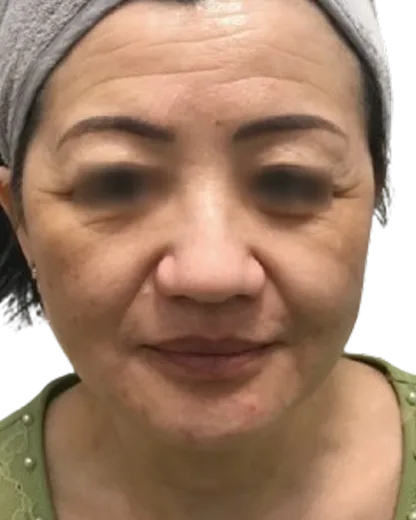
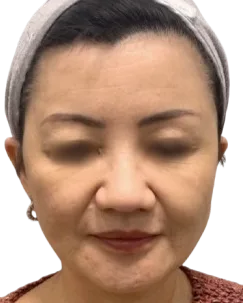
Case 1 · Real Nasolabial Fold Documentation
- Client Profile
- Asian Female · Fitzpatrick IV
- Primary concern
- Nasolabial Folds (Comprehensive Improvement with Multi-Modal Combination Therapy)
- Treatment plan
- PicoSure® + PicoSure Pro® + PicoWay® + Ultherapy® and 17 additional treatments (multiple sessions within 3 months)
- Treatment outcome
- Significant improvement in nasolabial folds · Natural overall result
- post-inflammatory hyperpigmentation (PIH)
- No PIH
- Maintenance
- 9-12 months later, HA filler refresh
Case 01: Before & After — Nasolabial Fold Treatment · Asian Female · Fitzpatrick IV · Multimodal Combination Protocol · Performed by our physician at Luowei Medical Aesthetics Clinic, Nanjing
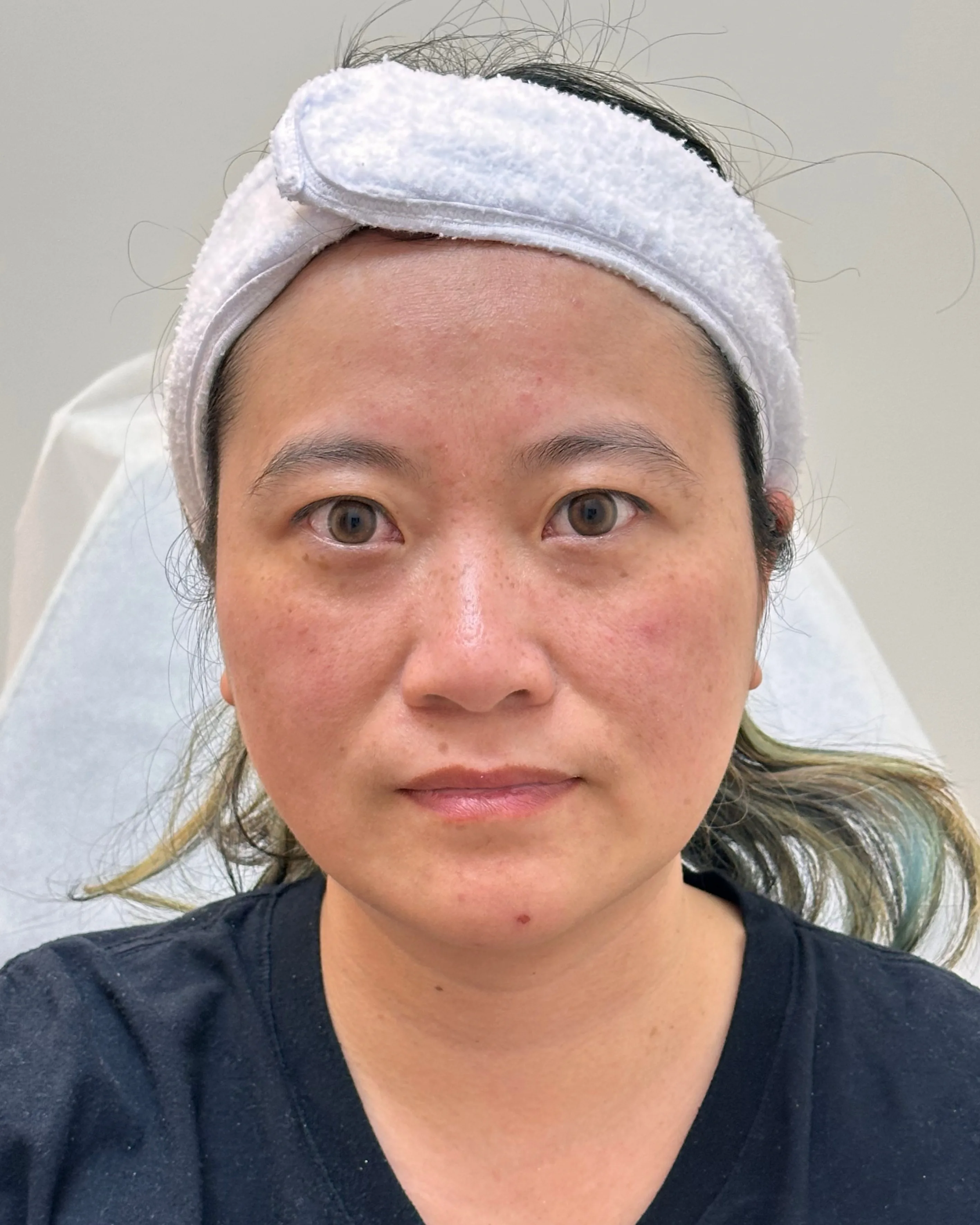
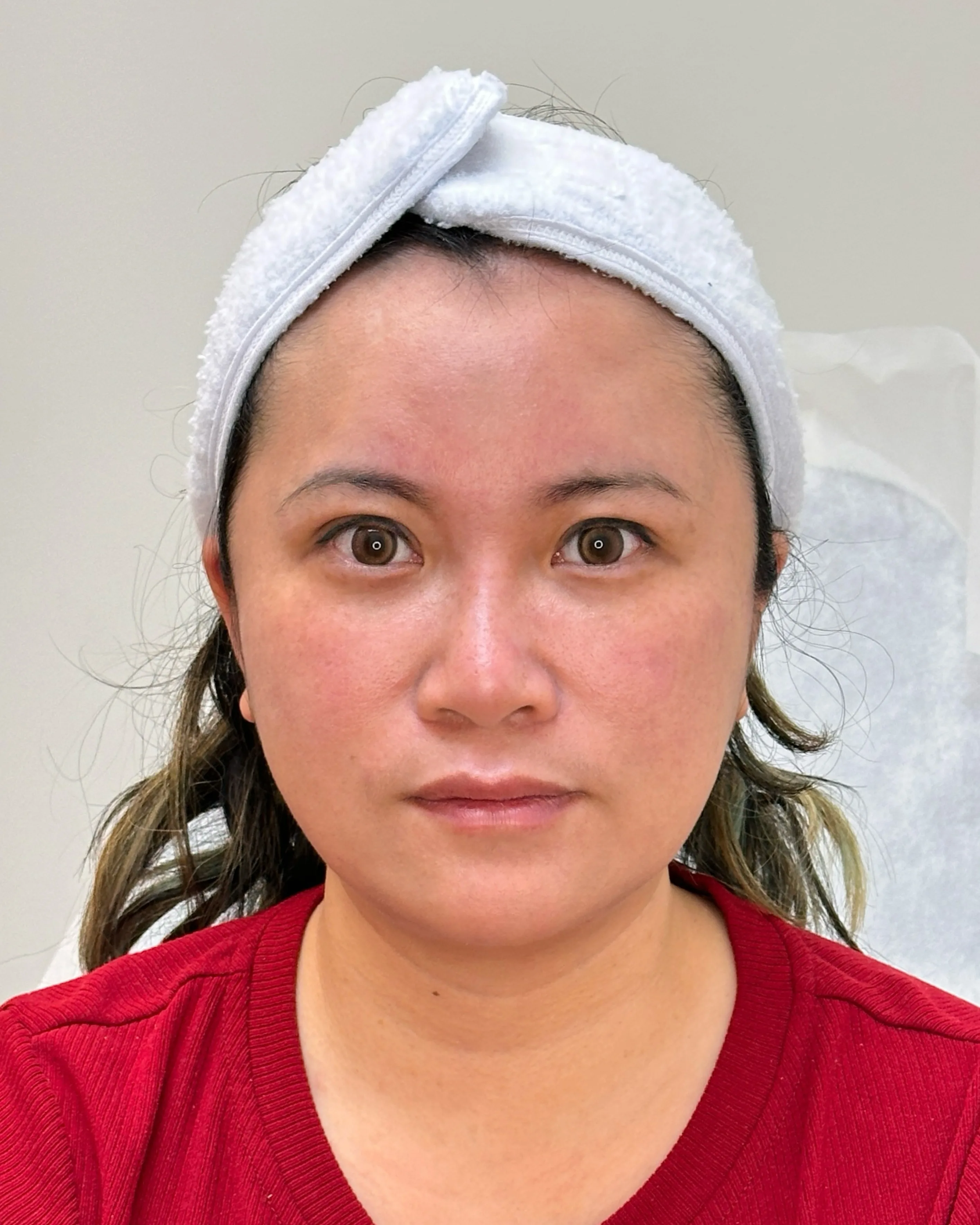
Case 14 · Nasolabial Fold — Authentic Clinical Record
- Client Profile
- Asian Female · Fitzpatrick IV
- Primary concern
- Nasolabial Folds (Comprehensive Improvement with Multi-Modal Combination Therapy)
- Treatment plan
- PicoSure® + PicoSure Pro® + PicoWay® + double eyelid thread lift, and 16 additional treatments (multiple sessions within 3 months)
- Treatment outcome
- Significant improvement in nasolabial folds · Natural overall result
- post-inflammatory hyperpigmentation (PIH)
- No PIH
- Maintenance
- Botox Small-volume 4-month maintenance + HA lip border refinement
Case 14: Before & After — Nasolabial Fold Treatment · Asian Female · Fitzpatrick IV · Multimodal combination approach led by our physician, at Luowei Medical Aesthetics Clinic, Nanjing
What Are Nasolabial Folds — and Why Are They Different from Wrinkles?
Nasolabial folds (smile lines) are the grooves that run from the sides of the nose down to the corners of the mouth. They are not simply skin wrinkles — their underlying cause is Descent of midface subcutaneous fat pads + retaining ligament laxity + collagen loss The convergence of these three factors creates a structural depression between the cheek and upper lip. Understanding this distinction is the key to determining whether direct fold filling is ever the right approach.
Why Shouldn’t You Just “Fill the Fold Directly”?
Nasolabial folds are a symptom, not the cause. Injecting HA filler directly into the fold can produce a “sausage-like” ridge and does nothing to address the underlying midface descent — the more you fill, the more unnatural the result.
Why Are Nasolabial Folds More Prominent in Asian Faces?
Asian faces typically feature a flatter midface and less prominent zygomatic support. Once soft tissue begins to descend after age 30, nasolabial folds tend to appear earlier and more prominently than in faces with greater three-dimensional structure.
Why Must MD Codes Be Followed?
MD Codes is Allergan’s globally certified injection mapping system. Our physician applies Upstream support first The guiding principle: restore cheek support first, then refine the nasolabial fold.
Why are treatment plans different for dynamic vs. static nasolabial folds?
Folds that only become apparent when smiling (dynamic type) may require only superficial Volift refinement; folds that are deeply set at rest (volume-loss type) must first be addressed with deep supraperiosteal anchoring. Using the wrong product or the wrong tissue plane makes an enormous difference in both outcome and longevity.
Clinical key points:Many clients who received a single direct nasolabial fold injection elsewhere report that their face looks unnatural or their smile feels stiff. The root cause is the absence of a mid-face structural assessment. Our physician’s nasolabial fold approach The first step is always a mid-face volume assessment, Rather than injecting directly into the nasolabial fold from the outset.
The Five Causes of Nasolabial Folds — It’s Not Just About Smiling
Many people assume nasolabial folds are caused by excessive facial expression — in reality, folds that develop after age 30 are almost always the result of Structural aging compounded by habitual facial expressions over time.
1. descent of mid-face fat pads
The malar fat pad descends and migrates inward with age, creating a zone of tissue bunching above the nasolabial fold that pushes the fold outward. This is the primary cause of nasolabial folds in patients over 30.
2. Retaining ligament laxity (zygomatic / mandibular)
As the zygomatic and mandibular retaining ligaments loosen, soft tissue loses its anchoring points and the entire mid-to-lower face descends, concentrating along the nasolabial region.
3. collagen and dermal atrophy
25 collagen diminishes by approximately 1% per year from the mid-20s onward; after age 40, skin thickness declines noticeably, dermal support weakens, and folds deepen progressively over time.
4. bone resorption (mid-face skeletal atrophy)
After age 40, measurable bone resorption occurs in the maxilla and pyriform aperture region, weakening the structural foundation of the midface and allowing soft tissue to descend further. Asian facial skeletons are inherently flatter in this area, making them more susceptible to this change.
5. Facial expression habits and sleeping position
Habitual side sleeping, frequent laughing, and repetitive smoking motions can deepen dynamic creases over time, but these are contributing factors — not the primary cause.
4 facial grooves commonly confused with nasolabial folds — key differential diagnosis points
When a client presents with a chief concern of “nasolabial folds,” clinical assessment must first identify exactly which groove is involved. Treating the wrong structure means spending money while making the face look worse.
Nasolabial Fold
Nasolabial Fold · Nasolabial fold
| Location | Lateral nasal ala → lateral oral commissure |
|---|---|
| Nature | Structural groove (result of midface descent) |
| Dynamic and static | Visible both at rest and with movement, varying in severity |
| Primary cause | Mid-face volume loss + retaining ligament laxity |
| First-line treatment | upstream support (Voluma) + local refinement (Volift) |
Marionette lines
Marionette Lines · Corner-of-mouth lines
| Location | corner of the mouth → toward the jawline |
|---|---|
| Nature | lower face sagging groove + active depressor anguli oris muscle |
| Dynamic and static | typically present at rest; sagging appearance becomes more pronounced with facial expressions |
| Primary cause | lower face descent + overactive depressor anguli oris (DAO) muscle |
| First-line treatment | Corner-of-mouth support with HA + Botox® DAO |
Tear Trough
Tear Trough · Infraorbital groove
| Location | Below the medial canthus → oblique toward the cheek |
|---|---|
| Nature | Depression at the infraorbital retaining ligament |
| Dynamic and static | Visible at rest, independent of facial expression |
| Primary cause | Infraorbital fat atrophy + retaining ligament fixation |
| First-line treatment | Low-molecular-weight HA with fine cannula injection technique |
Mid-Cheek Groove
Mid-Cheek Groove · Malar-cheek junction groove
| Location | Horizontal extension along the inferior zygomatic border |
|---|---|
| Nature | Mid-face tear trough groove, often mistaken for an extension of the nasolabial fold |
| Dynamic and static | Visible at rest, deepens with smiling |
| Primary cause | Malar fat pad descent + zygomatic arch atrophy |
| First-line treatment | Voluma Supraperiosteal support |
⚠️ Note:Clinically, approximately 25% of clients who present with a chief concern of “severe nasolabial folds” are found upon assessment to actually have Malar groove + midface descent is the primary driver — the nasolabial fold is merely a surface manifestation. For these clients, directly filling the fold yields poor results and pronounced side effects. An inaccurate diagnosis leads to wasted money and an unnatural appearance.
Why do nasolabial folds in Asian faces require a “midface-support-first” protocol?
Blind spots in mainstream North American clinics
Most medical aesthetic clinics in North America base their filler approach on a Caucasian facial paradigm — characterized by defined features, high cheekbones, and inherent mid-face structural support. Applying this framework directly to Asian faces leads to two core problems:
- ✗ directly filling the nasolabial fold— Ignoring the naturally flatter Asian mid-face — overfilling leads to a puffy, sausage-like appearance
- ✗ Insufficient volume at the cheek anchor— Caucasian protocols assume existing zygomatic support; Asian faces require greater anchor volume
- ✗ Imbalanced proportions around the mouth— Western aesthetics emphasize lip augmentation; however, combining lip augmentation with deep nasolabial fold filling in Asian faces tends to accentuate forward projection of the orbicularis oris,
Our physician’s Asian face adaptation
| Parameters | North American standard | Asian adaptation |
|---|---|---|
| Preferred starting point | Direct filling of the nasolabial fold | Upstream mid-face structural support |
| Product Selection | Voluma Single product | Voluma + Volift Dual-layer combination |
| Cheek support dosage | light dose per side | Moderately reinforced anchoring point on each side |
| Nasolabial groove dosage | High-volume filling | Minimal superficial refinement |
| Assessment Tools | Visual | MD Codes + Palpation + dynamic and static facial analysis |
Key differentiating factors:Our physician specialises in treating Asian faces at our Nanjing clinic, and brings in-depth expertise in MD Codes Asian face–adapted protocol, Prioritizing upstream structural support rather than placing all HA directly into the fold.
6 Treatment Approaches for Nasolabial Folds — Matched to Your Subtype
There is no single magic injection that eliminates nasolabial folds. Based on the mid-face assessment and degree of aging, we design a combination of the following products and treatments.
Juvéderm Voluma(deep supraperiosteal support)
Allergan The world’s deep HA filler. Its high-cohesivity formulation is specifically designed for supraperiosteal anchoring at the cheek and mid-face.The Upstream Foundation of Nasolabial Fold Treatment. Our physician.
Juvéderm Volift(superficial-to-mid-layer refinement)
A medium-viscosity HA filler suited for superficial refinement and blending of the nasolabial fold itself. Combined with Voluma upstream support, this creates a layered “pyramid” volumizing approach.
Restylane Lyft / Defyne
Galderma NASHA / XpresHAn technique, offering greater flexibility — well suited for areas with active facial expression.Dynamic nasolabial folds Available as an alternative to Juvéderm®.
Sculptra® (poly-L-lactic acid, PLLA)
Not a filler, but rather Collagen stimulator. 3 Each session progressively builds the body’s own collagen — ideal for clients over 40 with generalized collagen-loss-type nasolabial folds. Results last 2 years or more.
Radiesse(calcium hydroxylapatite)
Dual effect: immediate volumization plus long-term collagen stimulation. Best suited for clients with significant bone resorption who require stronger structural support. Used primarily for deep supraperiosteal anchoring, not for superficial refinement.
Sofwave / Fotona 4D skin tightening and lifting
Energy-based devices tighten the SMAS fascia, addressing the root cause of mid-face descent. Used alongside filler, they significantly extend the durability of nasolabial fold improvement.
Our physician’s 6-Step Standard Protocol for Nasolabial Fold Treatment
Consultation + MD Codes midface assessment
30 minute complimentary consultation, during which our physician personally performs mid-face palpation, dynamic and static facial analysis, assessment of malar fat pad descent, and VISIA quantitative imaging.No needle without assessment.
Treatment planning (upstream-first principle)
Based on the assessment findings, our physician maps out the MD Codes injection points during the consultation — first establishing the zygomatic and malar fat pad support points (Ck1/Ck2), then determining whether the nasolabial fold itself requires additional volume. Never the other way around.
Day of injection · Topical anesthetic + cannula technique + staged injection
Topical anesthetic applied for 20 minutes, blunt cannula technique prioritized to minimize vascular risk, and layered multi-session injection approach. All injections are performed personally by our physician — never delegated to an assistant or technician.
2 week follow-up refinement
HA A follow-up is scheduled after full hydration. If any asymmetry or minor adjustment is needed, a small amount of filler is added to refine the result.never achieve full correction in the first session, This is our physician’s core principle for preventing overfilling.
3 month assessment
Dynamic and static reassessment with VISIA quantitative comparison. For clients with significant volume loss, a discussion of whether to incorporate a Sculptra® long-term collagen-stimulating protocol.
Maintenance period (every 12–18 months)
Voluma Lasting 18–24 months, with Volift lasting 12 months. Our physician favors small, timely top-ups over large-volume re-treatments — a strategy that delivers more natural long-term results with lower risk.
Treatment Timeline — How Soon Will You See Results?
| Classification | Treatment cycle | Initial Results | Significant improvement | Maintenance cycle |
|---|---|---|---|---|
| dynamic type (early stage) | 1 sessions | Same day | 2 weeks later | every 12–18 months |
| volume loss type (moderate) | 2 Sessions (2 weeks apart) | Same day | 4 weeks later | Every 18–24 months |
| Collagen-loss type (40+) | Sculptra 3 sessions + HA fine-tuning | Week 6 | 3 months later | booster every 2 years |
| revision / correction cases | Dissolve + redo after 4 weeks | The day after dissolving | 2 weeks after redoing | Personalized |
Clinical note:Rushing to achieve full correction in a single session is the most common mistake in nasolabial fold treatment. Among our physician’s clients in Nanjing, those who followed the staged, conservative dosing with a 2-week follow-up consistently reported significantly higher satisfaction at 12 months compared to those treated with a single full-correction approach — with virtually zero overfilling incidents.
Are You a Candidate for Nasolabial Fold Treatment? 2-Minute Self-Assessment
✅ A good starting point for assessment
- ✓Visible nasolabial fold at rest / deepens with smiling
- ✓30 Years of age or older with a general sense of increased facial sagging
- ✓Flat midface / reduced zygomatic projection
- ✓were told to “just fill the fold directly” but found the results unsatisfactory
- ✓Willing to undergo staged treatment (rather than a single fill-to-completion session)
- ✓Commitment to a 12–18 month maintenance treatment cycle
❌ other conditions must be addressed or resolved first
- ✗Currently pregnant or breastfeeding
- ✗Active infection at the injection site / acute acne flare
- ✗Known allergy to hyaluronic acid or lidocaine
- ✗Use of blood-thinning medications within the past 2 weeks (requires physician assessment)
- ✗active autoimmune disease
- ✗Expecting non-surgical results equivalent to a surgical facelift (unrealistic expectations)
Luowei Medical aesthetic nasolabial fold protocol vs. standard medspa approach
- ✗asking “how many syringes do you want?” at the door without performing a mid-face assessment
- ✗Injecting all HA directly into the nasolabial groove
- ✗Sharp needle technique predominant — higher vascular risk
- ✗Single-session fill-to-completion — no follow-up refinement
- ✗injections are often performed by nurses or assistants, without direct physician involvement
- ✗After overfilling, they will simply encourage you to add more.
- ✗will not proactively recommend dissolution
- ✓MD Codes mid-face + dynamic and static assessment is essential
- ✓upstream support first — Voluma + Volift layered combination
- ✓primarily cannula-based technique, significantly reducing vascular events
- ✓Staged injections + 2-week follow-up refinement
- ✓Personally Consulted and Injected by our physician
- ✓Proactively identifying overfilled results and recommending dissolution and reshaping
- ✓Long-term maintenance plan + whole-face aesthetic coordination
Why Is Luowei Medical Aesthetics Clinic’s Approach to Nasolabial Folds Trustworthy?
Experience
Expertise
Authoritativeness Authority
Multi-brand trainer · published author
Trustworthiness Trustworthy
All cases on this page are shared with signed media release authorization · Injected by the physician personally
About the Cost of Nasolabial Fold Treatment
Pricing for nasolabial fold treatment varies widely across clinics — but the real cost driver is not the product itself. It comes down to who assesses you, who determines the treatment sequence, and how much clinical judgment the physician needs to apply. The challenge with nasolabial folds is not simply “where to inject,” but rather “what to address first, with which product, and in what amount” — decisions that involve mid-face structural support, balancing dynamic and static factors, and harmonizing overall facial proportions. These are judgments that only an experienced injecting physician can make. At our clinic, all injectable treatments are performed exclusively by our physician. Our pricing reflects this level of physician-led care. For clients who have already completed a comprehensive treatment plan and simply need small annual touch-ups for maintenance, the process is relatively straightforward and more accessible. The difference in injection pricing fundamentally reflects the gap in clinical experience between physician-performed and technician-performed treatments. The right plan for you is determined by your facial structure — not by price. All specifics will be discussed during your consultation, incorporating MD Codes assessment and dynamic/static facial analysis.
- Payment is made at the clinic, after the consultation and before treatment begins
- Nothing is paid in advance, and no deposit is required to hold an appointment
- Cosmetic treatment is a self-pay item and is not covered by public medical insurance in China
- All first-time clients receive a complimentary 30-minute Free Consultation & Assessment
Risks & Contraindications — We believe in full transparency
What are the main risks?
1. Vascular events / vascular occlusion(rare but serious) — risk is significantly reduced with cannula technique and thorough anatomical knowledge; Hyaluronidase is kept on-site for emergencies; 2. Bruising / swelling at injection sites (common, resolves in 3–7 days); 3. Asymmetry / mild nodules (addressed at the 2-week follow-up touch-up); 4. Temporary tenderness or firmness (subsides once HA is fully hydrated); 5. Overfilling / Tyndall effect (bluish tint in superficial layers) — dissolved if necessary.
Who should not have this treatment?
Pregnancy, breastfeeding, active infection or acute acne breakout at the injection site, known allergy to hyaluronic acid or lidocaine, recent active cold sore outbreak, active autoimmune disease, uncontrolled bleeding tendency, and unrealistic expectations (expecting non-surgical results equivalent to a surgical facelift) — in any of these situations, our physician will recommend postponing treatment or addressing the underlying concern first.
How can bruising and swelling be minimized?
5 key steps: (1) Avoid blood-thinning agents — including aspirin, ibuprofen, vitamin E, fish oil, and ginkgo — for 2 weeks before injection (continue any physician-prescribed medications as directed); (2) cannula-first technique to minimize vascular injury; (3) apply cold compresses before and after treatment; (4) avoid alcohol and strenuous exercise on the day of treatment; (5) do not massage the injection sites for 24 hours.
What does the informed consent form include?
Every client is required to sign an Informed Consent form prior to their first injection. The form covers: product composition and mechanism of action, potential adverse reactions and their likelihood, emergency protocols for vascular events, Hyaluronidase dissolution mechanism, alternative treatment options, follow-up arrangements, and a Media Release (optional). All content is explained in person by our physician — not delegated to administrative staff.
Where the medical claims on this page come from
Everything above about Nasolabial folds rests on published evidence rather than on our own word. The sources below are the ones behind those statements: peer-reviewed papers indexed in PubMed, and guidance written for patients by dermatology academies and national health services. Read them before you decide — and bring any of them to your consultation.
- Peer-reviewedBotulinum toxin type A for facial wrinkles
- Peer-reviewedBotulinum Toxin Treatment for Mild to Moderate Platysma Bands: A Systematic Review of Efficacy, Safety, and Injection Technique
- Patient guidanceWrinkles
- Patient guidanceDermal fillers: Overview
- Patient guidanceBotulinum toxin: Overview
What these references can and cannot tell you. They describe what is known about the treatment itself — how well it tends to work, how long results last, and what can go wrong. They are not an assessment of this clinic, and no published study can tell you whether it suits your skin type, anatomy, or medical history. That judgement comes from the physician who examines you in person, and it may well be “not this one”.